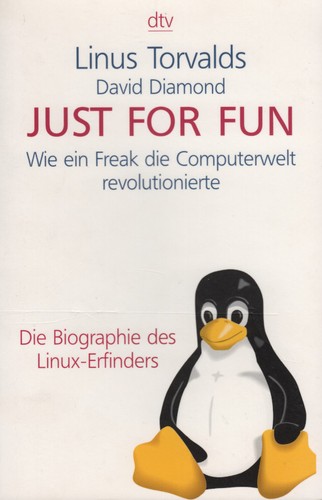
What I learned from reading Just for Fun: The Story of an Accidental Revolutionary by Linus Torvalds and David Diamond. ---- [0:01] From a party of one it now counted millions of users on every continent, including Antartica, and even outer space, if you count NASA outposts. Not only was it the most common operating system, but its very development model—an intricate web of its own, encompassing hundreds of thousands of volunteer computer programmers—had grown to become the largest collaborative project in the history of the world. [1:08] Revolutionaries aren’t born. Revolutions can’t be planned. Revolutions can’t be managed. Revolutions happen. And sometimes, revolutionaries just get stuck with it. [9:05] The Swedish language has no equivalent to the term “dysfunctional family.” As a result of the divorce, we didn’t have a lot of money. Mom would have to pawn her only investment—the single share of stock in the Helsinki telephone company. I remember going with her once and feeling embarrassed about it. Now I’m on the board of directors of the same company. [10:13] Linus has no handlers, doesn’t listen to voice mail, and rarely responds to email. [10:40] I found Linus to be unexpectedly knowledgable about American business history. [13:19] Some of the smartest programmers out there are fifteen-year-old kids playing around in their rooms. It’s what I thought sixteen years ago, and I still suspect it’s true. [13:46] Everybody has a book that has changed his or her life. As I read the book I started to understand. I got a big enthusiastic jolt. Frankly, it never subsided. I hope you can say the same about something. [16:01] An ugly system is one in which there are special interfaces for everything you want to do. Unix is the opposite. It gives you the building blocks that are sufficient for doing everything. That’s what having a clean design is all about. It’s the same with languages. The English language has twenty-six letters and you can build up everything from those letters. Unix comes with a small-is-beautiful philosophy. It has a small set of simple basic building blocks that can be combined into something that allows for infinite complexity of expression. [17:39] You should absolutely not dismiss simplicity for something easy. It takes design and good taste to be simple. [27:42] You can do something the brute force way, the stupid, grind-the-problem-down-until-it’s-not-a-problem-anymore way, or you can find the right approach and suddenly the problem just goes away. You look at the problem another way, and you have this epiphany: It was only a problem because you were looking at it the wrong way. [29:00] That was the point where I almost gave up, thinking it would be too much work and not worth it. [50:52] It’s been well established that folks do their best work when they are driven by a passion. When they are having fun. This is as true for playwrights and sculptors and entrepreneurs as it is for software engineers. [51:48] Survive. Socialize. Have fun. That’s the progression. And that’s also why we chose “Just For Fun” as the title of this book. Because everything we ever do seems to eventually end up being for our own entertainment. [52:02] My theory of the meaning of life doesn’t actually guide you in what you should be doing. At most, it says “Yes, you can fight it, but in the end the ultimate goal of life is to have fun.” ---- Founders Notes gives you the ability to tap into the collective knowledge of history's greatest entrepreneurs on demand. Use it to supplement the decisions you make in your work. Get access to Founders Notes here. ---- “I have listened to every episode released and look forward to every episode that comes out. The only criticism I would have is that after each podcast I usually want to buy the book because I am interested so my poor wallet suffers. ” — Gareth Be like Gareth. Buy a book: All the books featured on Founders Podcast
“The podcast discusses the book 'Just for Fun', which is about Linus Torvalds and his journey in creating Linux, highlighting its unique narrative style and themes.”
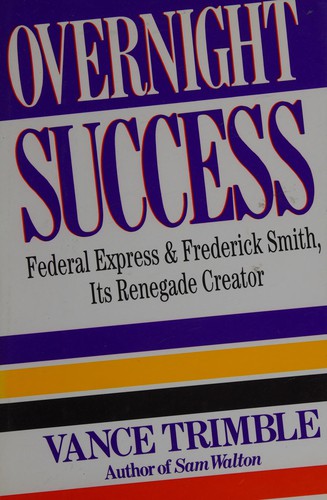
“It's the book on Fred Smith and the founding of FedEx. I always remember the very first thing. Think about how difficult creating a FedEx from scratch would be.”
“The excerpt mentions 'Overdrive' in the context of discussing Bill Gates and his management style, indicating it is a book that provides insights into Microsoft.”

%22%2F%3E%0A%20%20%3Crect%20x%3D%2218%22%20y%3D%2218%22%20width%3D%22204%22%20height%3D%228%22%20rx%3D%224%22%20fill%3D%22%2314b8a6%22%20opacity%3D%220.9%22%2F%3E%0A%20%20%3Crect%20x%3D%2218%22%20y%3D%2240%22%20width%3D%22204%22%20height%3D%222%22%20rx%3D%221%22%20fill%3D%22%2314b8a6%22%20opacity%3D%220.55%22%2F%3E%0A%20%20%3Ctext%20x%3D%2222%22%20y%3D%22194%22%20font-size%3D%2284%22%20font-weight%3D%22700%22%20fill%3D%22%23f0fdfa%22%20font-family%3D%22system-ui%2C%20-apple-system%2C%20Segoe%20UI%2C%20sans-serif%22%3EJF%3C%2Ftext%3E%0A%20%20%3Ctext%20x%3D%2222%22%20y%3D%22268%22%20font-size%3D%2218%22%20fill%3D%22%23f0fdfa%22%20opacity%3D%220.95%22%20font-family%3D%22system-ui%2C%20-apple-system%2C%20Segoe%20UI%2C%20sans-serif%22%3EJust%20for%20Fun%3A%20The%20Story%20%3C%2Ftext%3E%0A%20%20%3Ctext%20x%3D%2222%22%20y%3D%22292%22%20font-size%3D%2213%22%20fill%3D%22%23f0fdfa%22%20opacity%3D%220.82%22%20font-family%3D%22system-ui%2C%20-apple-system%2C%20Segoe%20UI%2C%20sans-serif%22%3ELinus%20Torvalds%20and%20David%20Dia%3C%2Ftext%3E%0A%3C%2Fsvg%3E)
%22%2F%3E%0A%20%20%3Crect%20x%3D%2218%22%20y%3D%2218%22%20width%3D%22204%22%20height%3D%228%22%20rx%3D%224%22%20fill%3D%22%234ade80%22%20opacity%3D%220.9%22%2F%3E%0A%20%20%3Crect%20x%3D%2218%22%20y%3D%2240%22%20width%3D%22204%22%20height%3D%222%22%20rx%3D%221%22%20fill%3D%22%234ade80%22%20opacity%3D%220.55%22%2F%3E%0A%20%20%3Ctext%20x%3D%2222%22%20y%3D%22194%22%20font-size%3D%2284%22%20font-weight%3D%22700%22%20fill%3D%22%23f0fdf4%22%20font-family%3D%22system-ui%2C%20-apple-system%2C%20Segoe%20UI%2C%20sans-serif%22%3EOS%3C%2Ftext%3E%0A%20%20%3Ctext%20x%3D%2222%22%20y%3D%22268%22%20font-size%3D%2218%22%20fill%3D%22%23f0fdf4%22%20opacity%3D%220.95%22%20font-family%3D%22system-ui%2C%20-apple-system%2C%20Segoe%20UI%2C%20sans-serif%22%3EOperating%20Systems%20Design%3C%2Ftext%3E%0A%20%20%3Ctext%20x%3D%2222%22%20y%3D%22292%22%20font-size%3D%2213%22%20fill%3D%22%23f0fdf4%22%20opacity%3D%220.82%22%20font-family%3D%22system-ui%2C%20-apple-system%2C%20Segoe%20UI%2C%20sans-serif%22%3EAndrew%20S.%20Tanenbaum%3C%2Ftext%3E%0A%3C%2Fsvg%3E)