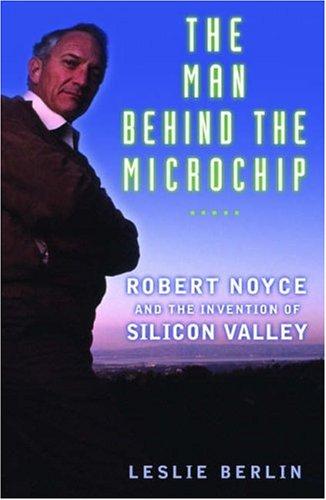
What I learned from reading The Man Behind the Microchip: Robert Noyce and the Invention of Silicon Valley by Leslie Berlin. ---- [0:01] Bob Noyce took me under his wing,” Steve Jobs explains. “I was young, in my twenties. He was in his early fifties. He tried to give me the lay of the land, give me a perspective that I could only partially understand.” Jobs continues, “You can’t really understand what is going on now unless you understand what came before.” [2:00] He inspired in nearly everyone whom he encountered a sense that the future had no limits , and that together they could , as he liked to say, “Go off and do something wonderful.” [3:15] Warren Buffett , who served on a college board with Noyce for several years said: “Everybody liked Bob. He was an extraordinarily smart guy who didn’t need to let you know he was that smart. He could be your neighbor, but with lots of machinery in his head.” [12:01] Noyce was slowly gathering experiences that would anchor his adult approach to life, which was not so much an approach as a headlong rush into any challenge with the unshakable assumption that he would emerge not only successful, but triumphant. [14:18] Every night before he fell asleep, Noyce would mentally rehearse each of his dives in slow motion until he could see himself executing them perfectly. He called this habit “envisioning myself at the next level,” and he carried it with him throughout his life. In his mind’s eye, he could always see himself achieving something more. [21:16] Bob was not the type to slow down for much of anything. [33:02] His approach was to know the science cold and then “forget about it.” He did not slog or grind his way to ideas; he felt they just came to him. When he heard Picasso’s famous line about artistic creativity — “I do not seek; I find” — Noyce said that he invented in the same way. [35:31] “I don’t have any recollection of a ‘ Boom! There it is!’ light bulb going off, ”Noyce later said of his ideas. Instead, he conceived of the integrated circuit in an iterative method he described thus: “[ I thought,] let’s see, if we could do this, we can do that. If we can do that, then we can do this. [It was] a logical sequence. If I hit a wall, I’d back up and then find a path, conceptually, all the way through to the end. [Once you have that path], you can come back and start refining, thinking in little steps that will take you there. Once you get to the point that you can see the top of the mountain, then you know you can get there.” [45:48] We were a hard, young, hungry group. Our attitude was ‘We don’t give a damn what money you have to offer, buddy. We’re going to do this ourselves.’ [1:08:55] Noyce was invited to dinner at the home of an entrepreneur whose company the his fund had supported. After the dishes had been cleared and the children sent to bed, Noyce listened as the company founder explained that some day, if the business did well, he would like to move his family into a bigger, nicer house. Noyce looked up at him and said very quietly, “You’ve got a nice family. I screwed up mine. Just stay where you are.” Twenty - five years and a successful company later, the entrepreneur has not moved. [1:09:45] His financial success directly benefited the entrepreneurs whose companies he funded, but the stories about Noyce’s success indirectly inspired many more. One entrepreneur put it this way: “Why do we love this dynamic environment? I’ll tell you why. Because we have seen what Steve Jobs, Bob Noyce, Nolan Bushnell [founder of Atari], and many others have done, and we know it can and will happen many times again. ”In other words, if they could do it, why couldn’t he? Such rationale functioned as a self - fulfilling prophecy in Silicon Valley, propelling the region forward on a self - perpetuating cycle of entrepreneurship and wealth. (This is what I hope Founders does.) ---- Founders Notes gives you the ability to tap into the collective knowledge of history's greatest entrepreneurs on demand. Use it to supplement the decisions you make in your work. Get access to Founders Notes here. ---- “I have listened to every episode released and look forward to every episode that comes out. The only criticism I would have is that after each podcast I usually want to buy the book because I am interested so my poor wallet suffers. ” — Gareth Be like Gareth. Buy a book: All the books featured on Founders Podcast
“The excerpt discusses Bob Noyce and his impact on Silicon Valley, referencing the book 'The Man Behind the Microchip' which details his life and contributions.”
Sentiment: Deep Dive
Trigger: Bob Noyce's impact
For: Entrepreneurs and tech enthusiasts
Key quote:“I think of William Shockley as a perfect example of what not to do, and Bob Noyce as a perfect example of what to do.”
The host mentions 'The Man Behind the Microchip' to highlight Bob Noyce's significant contributions to the tech industry and his contrasting legacy with William Shockley. The book serves as a lens to explore Noyce's journey and the qualities that made him a successful entrepreneur and mentor.
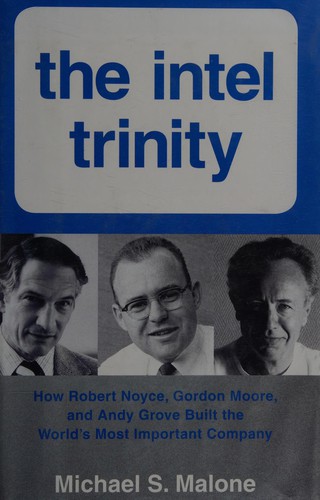
“The speaker mentions having read 'The Intel Trinity' and focusing mainly on Bob Noyce, indicating its relevance to the discussion about Noyce.”
Sentiment: Deep Dive
Trigger: Bob Noyce's impact
For: Listeners interested in tech history and entrepreneurship
Key quote:“I discovered Bob Noyce by reading a biography of Steve Jobs, and Steve Jobs talks about at length how important Bob Noyce was as a mentor and how much he learned from him.”
The host mentions 'The Intel Trinity' to highlight Bob Noyce's significant role in the tech industry and his mentorship of Steve Jobs. This discussion serves as a foundation for exploring Noyce's life and contrasting it with William Shockley's failures.
“The speaker mentions reading about Microsoft's flat hierarchy in the book 'Hard Drive' and compares it to the early days of Fairchild Semiconductor.”
Sentiment: Passing Reference
Trigger: Microsoft's flat hierarchy
For: Listeners interested in tech history and organizational structures.
Key quote:“The speaker mentions reading about Microsoft's flat hierarchy in the book 'Hard Drive'.”
The host briefly references the book 'Hard Drive' to highlight Microsoft's organizational structure. This comparison is made to draw parallels with the early days of Fairchild Semiconductor.
“The speaker references Ed Catmull's book 'Creativity, Inc.' and discusses its insights on Steve Jobs and management skills.”
Sentiment: Deep Dive
Trigger: management and creativity
For: Managers and leaders in creative industries
Key quote:“At the end of that book, he has an entire epilogue chapter called The Steve We Knew.”
The host mentions 'Creativity, Inc.' to highlight Ed Catmull's insights on management and collaboration, particularly in relation to Steve Jobs' development over time. The discussion emphasizes the importance of people skills and creative freedom in fostering innovation, contrasting it with less effective management styles.
“It's about how did U.S. industry cooperation between academia, industry and government produce all the necessary material to help win World War two. And anyway, Kaiser's in this book.”
Sentiment: Deep Dive
Trigger: Bob Noyce's mindset
For: Entrepreneurs and aspiring innovators
Key quote:“I really do admire Noyce. He's not perfect.”
The host discusses Bob Noyce's journey and the risks he took throughout his career, emphasizing the importance of having a growth mindset. This leads to a mention of 'The Founders' as it provides insights into the lives of influential figures like Noyce.
“Mark Andreessen quotes Ben Horowitz's book, discussing the emotions experienced in startups, specifically euphoria and fear.”
Sentiment: Passing Reference
Trigger: startup challenges and emotions
For: Entrepreneurs and startup founders
Key quote:“Andreessen says what he likes the most about startups is that in a startup, you only experience two emotions, euphoria and fear.”
The host mentions Ben Horowitz's book to highlight the emotional rollercoaster that comes with running a startup. Mark Andreessen's quote from the book encapsulates the dual feelings of euphoria and fear that entrepreneurs often experience.
“One of the best books I've read for the podcast is Andy Grove's memoir, Swimming Across. It talks about the first 20 years of his life and is a wonderfully written story.”
Sentiment: Highly Recommended
Trigger: Andy Grove's leadership style
For: Individuals interested in leadership and personal development
Key quote:“I really feel one of the best books I've read for the podcast is Andy Grove's memoir, Swimming Across.”
The host highlights Andy Grove's significant impact at Intel and contrasts his leadership style with that of Bob Noyce. The mention of 'Swimming Across' serves to illustrate Grove's remarkable life story and the challenges he overcame, which shaped his approach to leadership.
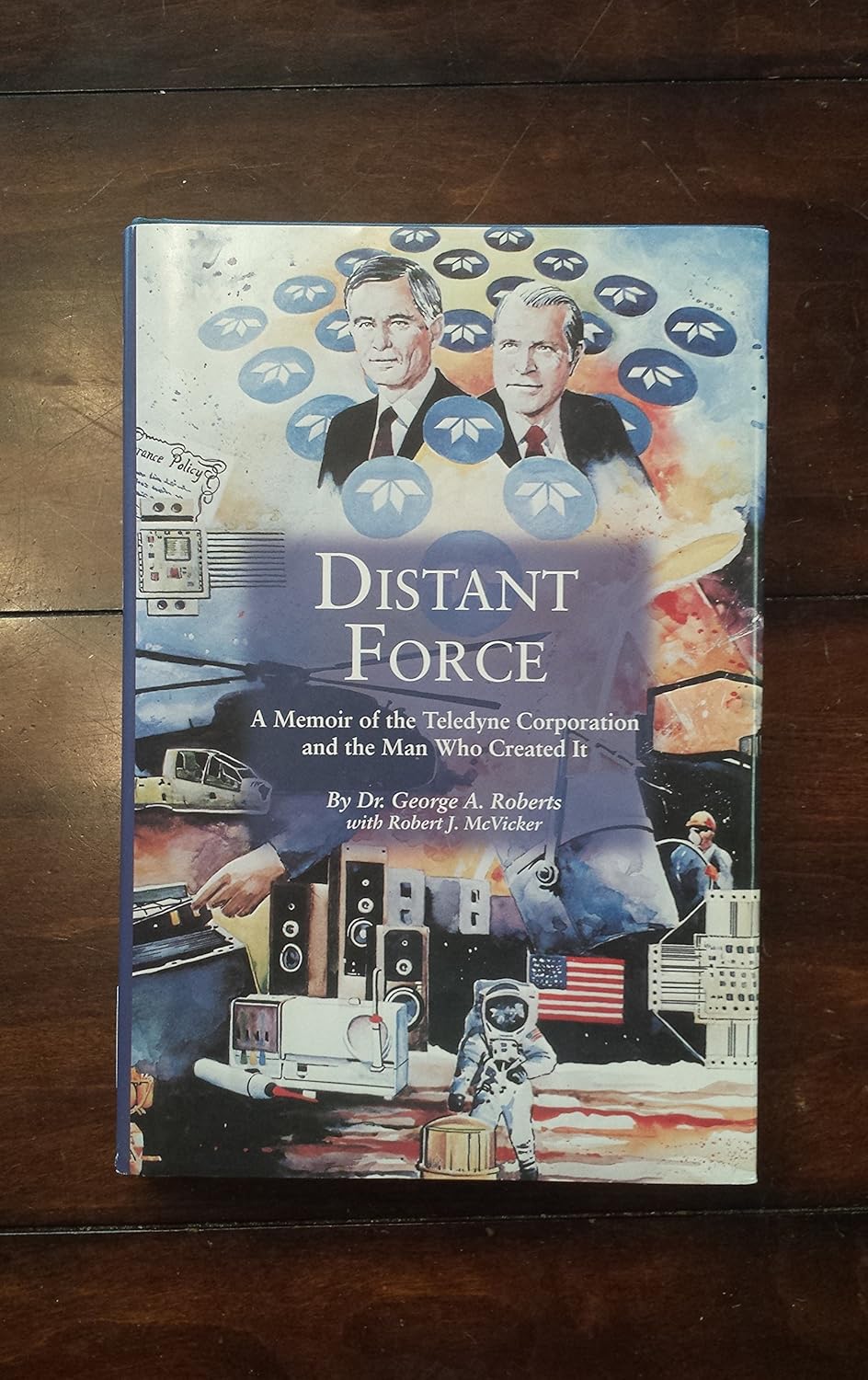
“This is from the book Distant Force, which I covered in Founders Number 110. Once criticized for not having a business plan, Henry replied that he knew that a lot of people running companies had very definitive plans.”
Sentiment: Deep Dive
Trigger: management styles in business
For: Entrepreneurs and business leaders
Key quote:“But we're subject to a great number of outside influences on our businesses and most of them can't be predicted.”
The host discusses the contrasting management approaches highlighted in 'Distant Force', particularly the preference for flexibility over rigid planning. This perspective is illustrated through Henry Singleton's views on adapting to unpredictable business environments.