Back to search

%22%2F%3E%0A%20%20%3Crect%20x%3D%2218%22%20y%3D%2218%22%20width%3D%22204%22%20height%3D%228%22%20rx%3D%224%22%20fill%3D%22%2394a3b8%22%20opacity%3D%220.9%22%2F%3E%0A%20%20%3Crect%20x%3D%2218%22%20y%3D%2240%22%20width%3D%22204%22%20height%3D%222%22%20rx%3D%221%22%20fill%3D%22%2394a3b8%22%20opacity%3D%220.55%22%2F%3E%0A%20%20%3Ctext%20x%3D%2222%22%20y%3D%22194%22%20font-size%3D%2284%22%20font-weight%3D%22700%22%20fill%3D%22%23f8fafc%22%20font-family%3D%22system-ui%2C%20-apple-system%2C%20Segoe%20UI%2C%20sans-serif%22%3ETP%3C%2Ftext%3E%0A%20%20%3Ctext%20x%3D%2222%22%20y%3D%22268%22%20font-size%3D%2218%22%20fill%3D%22%23f8fafc%22%20opacity%3D%220.95%22%20font-family%3D%22system-ui%2C%20-apple-system%2C%20Segoe%20UI%2C%20sans-serif%22%3ETuxedo%20Park%3C%2Ftext%3E%0A%20%20%3Ctext%20x%3D%2222%22%20y%3D%22292%22%20font-size%3D%2213%22%20fill%3D%22%23f8fafc%22%20opacity%3D%220.82%22%20font-family%3D%22system-ui%2C%20-apple-system%2C%20Segoe%20UI%2C%20sans-serif%22%3EAlfred%20Loomis%3C%2Ftext%3E%0A%3C%2Fsvg%3E)


FoundersFebruary 1, 2021
#165 William Shockley (Creator of the Electronic Age)
Listen
About This Episode
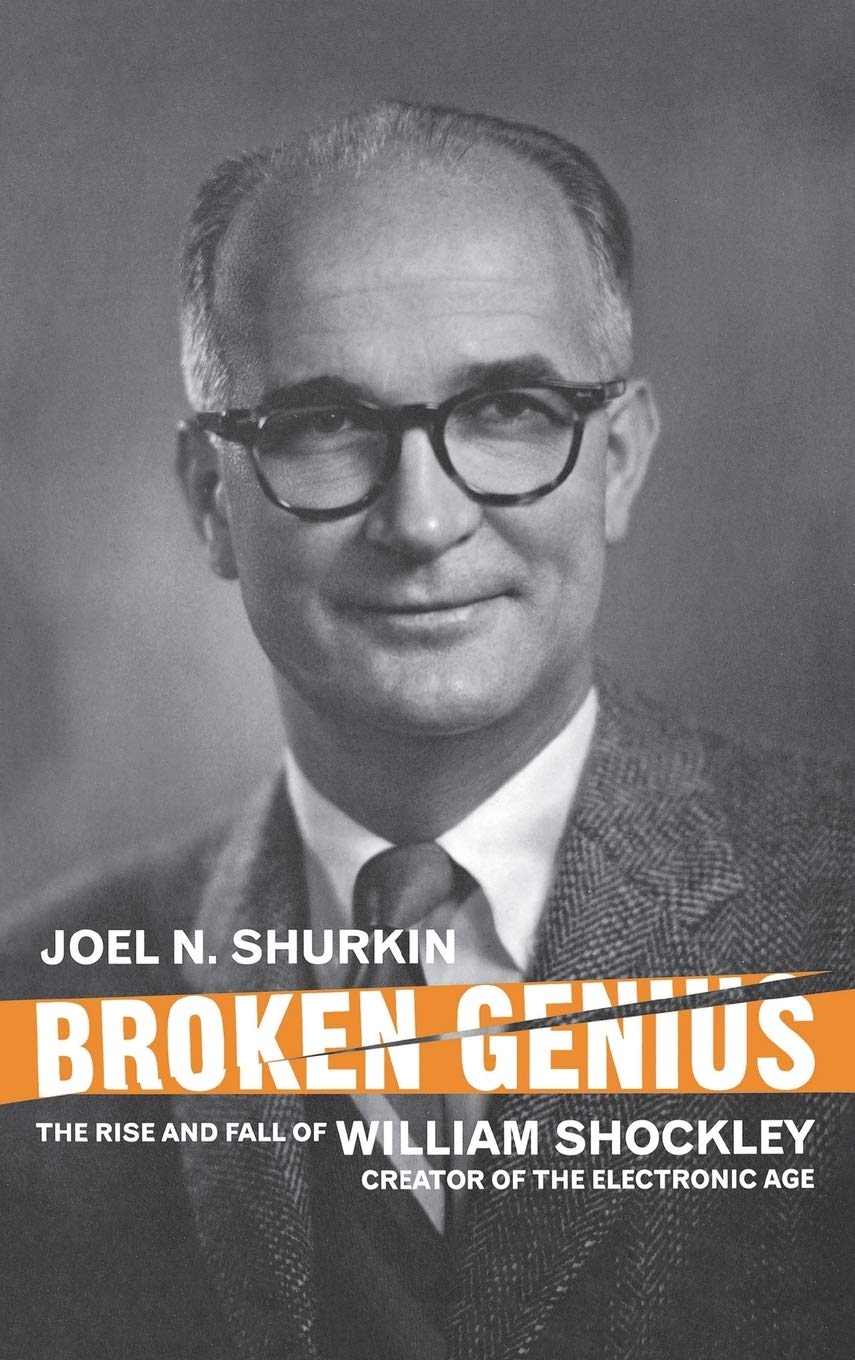
What I learned from reading Broken Genius: The Rise and Fall of William Shockley, Creator of the Electronic Age by Joel Shurkin. ---- [1:19] Why would a man as unquestionably brilliant as he knowingly and deliberately destroy himself? [5:04] Dear Jean: I am sorry that I feel I can no longer go on. Most of my life I have felt. that the world was not a pleasant place and that people were not a very admirable form of life. I find that I am particularly dissatisfied with myself and that most of my actions are the consequence of motives of which I am ashamed. Consequently, I must regard myself as less well suited than most to carry on with life and to develop the proper attitudes in our children. I hope you have better luck in the future. —Bill. He took out his revolver, put a bullet in one of the six chambers, put the gun to his head and pressed the trigger. Nothing happened. He put the gun away and wrote a second note. [13:36] “My elation with the group’s success was balanced by the frustration of not being one of the inventors. I experienced frustration that my personal efforts had not resulted in a significant inventive contribution of my own.” Apparently his involvement was too passive to provide Shockley with the credit he craved. [16:29] I am overwhelmed by an irresistible temptation to do my climbing by moonlight and unroped. This is contrary to all my rock climbing teaching and does not mean poor training but only a strong headedness. [24:21] The rise and fall of Bill Shockley’s company took less than a year and a half. It profoundly affected Shockley, but had even more impact on the world around him and on our lives today. In all of the history of business, the failure of Shockley Semiconductor is in a class by itself. [35:26] Shockley was often insulting, treating his employees the way he treated his sons, with no glimmer of sensitivity. His favorite crack, when he thought someone was wrong, was: ‘Are you sure you have a PhD?’ Worse of all, he could not keep himself from believing he was in competition with his employees. The very people he hired because they were so bright. He just didn’t want them to be as bright as he was. That his employees could come up with their own ideas did not register with him. [46:07] Bob Noyce and Gordon Moore decided it was time to go and set up their own company. They raised the capital, based entirely on Noyce’s reputation, with one telephone call to Arthur Rock. They called the new company Intel. They lived Bill Shockley’s fantasy. They directed the flow of the technology and made billions. [52:12] A genealogy of Silicon Valley showed that virtually every company in the valley could show a line leading directly to someone who worked at and eventually left Fairchild Semiconductor. Everyone from Fairchild originally came from Shockley Semiconductor. Shockley’s company was the seed of Silicon Valley. [1:00:48] They called his personality “reverse charisma.” [1:01:07] Alison read about her father’s death in the Washington Post. Emmy, obeying her husband’s last order, did not call her or Shockley’s sons. Emmy had her husband’s body cremated. She did not have a memorial service. It is not clear who would have come. ---- Founders Notes gives you the ability to tap into the collective knowledge of history's greatest entrepreneurs on demand. Use it to supplement the decisions you make in your work. Get access to Founders Notes here. ---- “I have listened to every episode released and look forward to every episode that comes out. The only criticism I would have is that after each podcast I usually want to buy the book because I am interested so my poor wallet suffers. ” — Gareth Be like Gareth. Buy a book: All the books featured on Founders Podcast
Book Mentions
5 book mentions in this episode.
Jump to booksTip: Click “Mentioned at …” to copy a timestamp.
Tip: Click a cover image to open a book link.
Books Mentioned
Broken Genius
Joel Shurkin
“This book discusses the rise and fall of William Shockley, the creator of the electronic age, and explores how a brilliant man could destroy himself.”
Sentiment: Deep Dive
Trigger: William Shockley's biography
For: Listeners interested in biographies and learning from historical figures' mistakes.
Key quote: “This book that I hold in my hand is full of insanities and absurdities.”
The host mentions 'Broken Genius' to explore the rise and fall of William Shockley, emphasizing the lessons learned from his life. The discussion highlights the importance of understanding both good and bad ideas from historical figures to avoid their mistakes.
ASIN: 1403988153
Buy on AmazonClick the book cover image to open the affiliate link.
“The speaker mentions being back on Founders 157 in the book The Innovators, where William Shockley is discussed quite a bit.”
Sentiment: Passing Reference
Trigger: William Shockley's biography
For: Listeners interested in technology history and biographies.
Key quote: “Most recently, I'm back on Founders 157 in the book The Innovators.”
The host mentions 'The Innovators' as a source that discusses William Shockley, highlighting his significant contributions and subsequent downfall. This reference serves to provide context for understanding Shockley's complex legacy in the field of technology.
ASIN: N/A
Buy on AmazonClick the book cover image to open the affiliate link.
Tuxedo Park
Alfred Loomis
“The most recent example, if you want to learn all about it, is that book Tuxedo Park about Alfred Loomis. It was fascinating.”
Sentiment: Passing Reference
Trigger: Shockley's interpersonal deficiencies
For: Listeners interested in historical figures in technology and science
Key quote: “The most recent example, if you want to learn all about it, is that book Tuxedo Park about Alfred Loomis.”
The host mentions 'Tuxedo Park' to highlight the contrasting personalities and capabilities of Bob Noyce and William Shockley. The book serves as a recent example of the complex dynamics in the scientific community during World War II.
ASIN: N/A
Buy on AmazonClick the book cover image to open the affiliate link.
Steve Jobs
Walter Isaacson
“If you read the biography of Steve Jobs, Robert Noyce plays a role because he was one of the main mentors of Steve Jobs.”
Sentiment: Deep Dive
Trigger: Steve Jobs and mentorship
For: Individuals interested in technology and entrepreneurship
Key quote: “If you read the biography of Steve Jobs, Robert Noyce plays a role because he was one of the main mentors of Steve Jobs.”
The host discusses the influence of Bob Noyce on Steve Jobs, highlighting how Noyce's mentorship shaped Jobs' approach to building Apple. This connection is drawn to illustrate the importance of learning from successful figures in the tech industry.
ASIN: B07ZMKXMTG
Buy on AmazonClick the book cover image to open the affiliate link.
“I did two podcasts on him, one on the book, The Outsiders, maybe like founders ninety eight.”
Sentiment: Deep Dive
Trigger: learning from others
For: Entrepreneurs and business leaders
Key quote: “Shockley made the fatal mistake that I already have it all figured out.”
The host mentions 'The Outsiders' to emphasize the importance of continuous learning and collaboration in achieving success. They contrast the experiences of Bob Noyce and Gordon Moore with that of William Shockley, highlighting how the former embraced growth while the latter remained stagnant.
ASIN: B07JBYB54G
Buy on AmazonClick the book cover image to open the affiliate link.