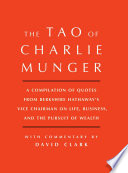
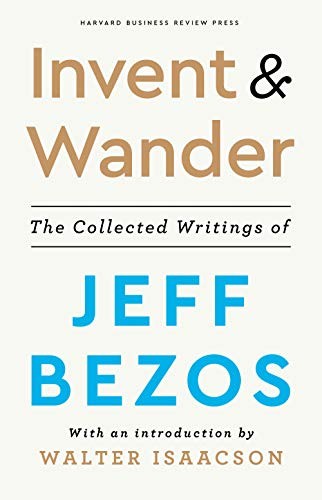
What I learned from reading Invent and Wander: The Collected Writings of Jeff Bezos, With an Introduction by Walter Isaacson. ---- [2:38] The whole point of moving things forward is that you run into problems, failures, things that don't work. You need to back up and try again. Each one of those times when you have a setback, you get back up and you try again. You're using resourcefulness; you're using self-reliance; you're trying to invent your way out of a box. We have tons of examples at Amazon where we’ve had to do this. [4:08] I would much rather have a kid with nine fingers than a resourceless kid. [5:51] I am often asked who, of the people living today, I would consider to be in the same league as those I have written about as a biographer: Leonardo da Vinci (#15), Benjamin Franklin (#115), Ada Lovelace, Steve Jobs (#5), and Albert Einstein. All were very smart. But that’s not what made them special. Smart people are a dime a dozen and often don’t amount to much. What counts is being creative and imaginative. That’s what makes someone a true innovator. And that’s why my answer to the question is Jeff Bezos. [8:26] One final trait shared by all my subjects is that they retained a childlike sense of wonder. At a certain point in life, most of us quit puzzling over everyday phenomena. Our teachers and parents, becoming impatient, tell us to stop asking so many silly questions. We might savor the beauty of a blue sky, but we no longer bother to wonder why it is that color. Leonardo did. So did Einstein, who wrote to another friend, “You and I never cease to stand like curious children before the great mystery into which we were born.” We should be careful to never outgrow our wonder years—or to let our children do so. [11:50] Jeff’s childhood business heroes were Thomas Edison and Walt Disney. “I’ve always been interested in inventors and invention,” he says. Even though Edison was the more prolific inventor, Bezos came to admire Disney more because of the audacity of his vision. “It seemed to me that he had this incredible capability to create a vision that he could get a large number of people to share.” [17:49] Keeping his focus on the customer, he emailed one thousand of them to see what else they would like to buy. The answers helped him understand better the concept of “the long tail,” which means being able to offer items that are not everyday best sellers and don’t command shelf space at retailers. “The way they answered the question was with whatever they were looking for at the moment. And I thought to myself we can sell anything this way.” [19:26] Every time a seismic shift takes place in our economy, there are people who feel the vibrations long before the rest of us do, vibrations so strong they demand action—action that can seem rash, even stupid. [22:00] “No customer was asking for Echo,” Bezos says. “Market research doesn’t help. If you had gone to a customer in 2013 and said, ‘Would you like a black, always-on cylinder in your kitchen about the size of a Pringles can that you can talk to and ask questions, that also turns on your lights and plays music?’ I guarantee they’d have looked at you strangely and said, ‘No, thank you’” [24:14] We will continue to focus relentlessly on our customers. [24:58] We are working to build something important, something that matters to our customers, something that we can all tell our grandchildren about. Such things aren’t meant to be easy. [26:22] We are doubly blessed. We have a market-size unconstrained opportunity in an area where the underlying foundational technology we employ improves every day. That is not normal. [29:14] Start with the customer and work backward. That is the best way to create value. [32:19] Amazon’s culture is unusually supportive of small businesses with big potential, and I believe that’s a source of competitive advantage. [35:47] Seek instant gratification —or the promise of it—and chances are you’ll find a crowd there ahead of you. [37:51] At a fulfillment center recently, one of our Kaizen experts asked me, “I’m in favor of a clean fulfillment center, but why are you cleaning? Why don’t you eliminate the source of dirt?” I felt like the Karate Kid. [39:21] When we are at our best, we don’t wait for external pressures. We are internally driven to improve our services, adding benefits and features, before we have to. We lower prices and increase value for customers before we have to. We invent before we have to. These investments are motivated by customer focus rather than by reaction to competition. [42:48] Outsized returns often come from betting against conventional wisdom, and conventional wisdom is usually right. Given a ten percent chance of a one hundred times payoff, you should take that bet every time. But you are still going to be wrong nine times out of ten. We all know that if you swing for the fences, you’re going to strike out a lot, but you’re also going to hit some home runs. The difference between baseball and business is that baseball has a truncated outcome distribution. When you swing, no matter how well you connect with the ball, the most runs you can get is four. In business, every once in awhile, when you step up to the plate, you can score one thousand runs. This long-tailed distribution of returns is why it’s important to be bold. Big winners pay for so many experiments. ---- Founders Notes gives you the ability to tap into the collective knowledge of history's greatest entrepreneurs on demand. Use it to supplement the decisions you make in your work. Get access to Founders Notes here. ---- “I have listened to every episode released and look forward to every episode that comes out. The only criticism I would have is that after each podcast I usually want to buy the book because I am interested so my poor wallet suffers. ” — Gareth Be like Gareth. Buy a book: All the books featured on Founders Podcast
“The excerpt titled 'Resourcefulness' is from the book Invent and Wander, which includes writings of Jeff Bezos with an introduction by Walter Isaacson.”
Sentiment: Deep Dive
Trigger: resourcefulness in business
For: Entrepreneurs and innovators
Key quote:“The whole point of moving things forward is that you run into problems, failures, things that don't work.”
The host mentions 'Invent and Wander' to illustrate the importance of resourcefulness and resilience in overcoming failures, drawing parallels to Jeff Bezos' experiences at Amazon. The book provides insights into Bezos' mindset and strategies, which are relevant for anyone looking to innovate and adapt in their own lives.
“Walter Isaacson is mentioned as the author of the biography 'Steve Jobs', which is referenced in the context of discussing his works.”
Sentiment: Passing Reference
Trigger: resourcefulness in innovation
For: Individuals interested in innovation and entrepreneurship
Key quote:“What counts is being creative and imaginative.”
The host mentions the book 'Steve Jobs' by Walter Isaacson while discussing the importance of resourcefulness and creativity in overcoming setbacks. This reference serves to highlight the qualities that make innovators like Jeff Bezos successful.
“Walter Isaacson is mentioned as the author of the biography 'Benjamin Franklin', which is referenced in the context of discussing his works.”
Sentiment: Deep Dive
Trigger: resourcefulness and innovation
For: Readers interested in innovation and biographies of influential figures
Key quote:“What counts is being creative and imaginative.”
The host mentions the book 'Benjamin Franklin' by Walter Isaacson to highlight the importance of resourcefulness and creativity in innovation. He draws parallels between Franklin's inquisitive nature and the qualities that make Jeff Bezos a successful innovator.
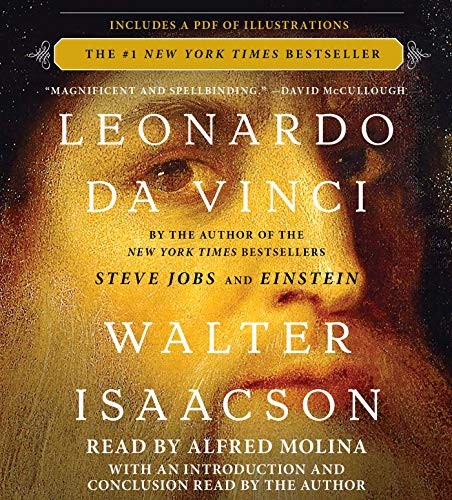
“Walter Isaacson is mentioned as the author of the biography 'Leonardo da Vinci', which is referenced in the context of discussing his works.”
Sentiment: Deep Dive
Trigger: Creativity and Innovation
For: Individuals interested in innovation and creativity
Key quote:“What counts is being creative and imaginative.”
The host mentions 'Leonardo da Vinci' to highlight the importance of creativity and imagination in innovation, comparing Jeff Bezos to historical figures known for their diverse knowledge. The discussion emphasizes that true innovators are not just smart but also possess a broad curiosity about various disciplines.
“I would always recommend starting with the Tao of Charlie Munger, even though the book The Poor Charlie's Almanac is way more comprehensive.”
Sentiment: Highly Recommended
Trigger: Jeff Bezos and decision-making
For: Entrepreneurs and business leaders
Key quote:“I think Charlie Munger is one of the most important thinkers I've ever come across.”
The host emphasizes the importance of 'The Poor Charlie's Almanac' in understanding the thought processes of influential figures like Jeff Bezos. They suggest that the book provides valuable insights into decision-making and the principles that drive successful entrepreneurs.
“I would always recommend starting with the Tao of Charlie Munger, even though the book The Poor Charlie's Almanac is way more comprehensive.”
Sentiment: Highly Recommended
Trigger: Charlie Munger's thinking
For: Individuals interested in business philosophy and decision-making
Key quote:“I would always recommend starting with the Tao of Charlie Munger, even though the book The Poor Charlie's Almanac is way more comprehensive.”
The host emphasizes the importance of understanding Charlie Munger's thought process and suggests that 'Tao of Charlie Munger' is a great starting point for this. They believe the book's structure allows readers to easily engage with Munger's ideas and insights.
“I think I learned it first when I read The Everything Store, Brad Stone's biography on Jeff Bezos. I think it's Founders number 16, somewhere back there if you haven't listened to the podcast or read the book yet.”
Sentiment: Highly Recommended
Trigger: Jeff Bezos decision-making
For: Entrepreneurs and business leaders
Key quote:“I think I learned it first when I read The Everything Store, Brad Stone's biography on Jeff Bezos.”
The host mentions 'The Everything Store' to highlight Jeff Bezos's regret minimization framework, which he considers a crucial concept for decision-making. The book provides insights into Bezos's thought process and the early days of Amazon, making it a valuable read for understanding entrepreneurial mindset.
“He talks about learning the importance of prudent spending from reading the autobiography of Sam Walton.”
Sentiment: Passing Reference
Trigger: importance of prudent spending
For: Individuals interested in financial management
Key quote:“He talks about learning the importance of prudent spending from reading the autobiography of Sam Walton.”
The host briefly mentions the autobiography of Sam Walton to highlight a lesson on prudent spending. This reference serves to illustrate how influential Walton's experiences can be in understanding financial management.
“The book is named, Invent and Wander. It talks about the importance of innovation, the importance of invention over and over again.”
Sentiment: Deep Dive
Trigger: resourcefulness in innovation
For: Entrepreneurs and innovators
Key quote:“The whole point of moving things forward is that you run into problems, failures, things that don't work.”
The host discusses the importance of resourcefulness and resilience in overcoming failures, drawing parallels to Jeff Bezos' experiences at Amazon. This leads to a mention of 'Invent and Wander,' which encapsulates Bezos' insights on innovation and problem-solving.
“It's called, We Are What We Choose. Address to the Princeton graduating class of 2010.”
Sentiment: Highly Recommended
Trigger: importance of intuition in decisions
For: Individuals interested in personal development and decision-making
Key quote:“I just highly encourage you to buy it.”
The host emphasizes the significance of making decisions based on heart and intuition rather than solely on analysis. He mentions the book 'We Are What We Choose' to highlight its valuable insights on decision-making and the importance of understanding what remains constant over time.

%22%2F%3E%0A%20%20%3Crect%20x%3D%2218%22%20y%3D%2218%22%20width%3D%22204%22%20height%3D%228%22%20rx%3D%224%22%20fill%3D%22%2314b8a6%22%20opacity%3D%220.9%22%2F%3E%0A%20%20%3Crect%20x%3D%2218%22%20y%3D%2240%22%20width%3D%22204%22%20height%3D%222%22%20rx%3D%221%22%20fill%3D%22%2314b8a6%22%20opacity%3D%220.55%22%2F%3E%0A%20%20%3Ctext%20x%3D%2222%22%20y%3D%22194%22%20font-size%3D%2284%22%20font-weight%3D%22700%22%20fill%3D%22%23f0fdfa%22%20font-family%3D%22system-ui%2C%20-apple-system%2C%20Segoe%20UI%2C%20sans-serif%22%3EIA%3C%2Ftext%3E%0A%20%20%3Ctext%20x%3D%2222%22%20y%3D%22268%22%20font-size%3D%2218%22%20fill%3D%22%23f0fdfa%22%20opacity%3D%220.95%22%20font-family%3D%22system-ui%2C%20-apple-system%2C%20Segoe%20UI%2C%20sans-serif%22%3EInvent%20and%20Wander%2C%20The%20C%3C%2Ftext%3E%0A%20%20%3Ctext%20x%3D%2222%22%20y%3D%22292%22%20font-size%3D%2213%22%20fill%3D%22%23f0fdfa%22%20opacity%3D%220.82%22%20font-family%3D%22system-ui%2C%20-apple-system%2C%20Segoe%20UI%2C%20sans-serif%22%3EJeff%20Bezos%3C%2Ftext%3E%0A%3C%2Fsvg%3E)


%22%2F%3E%0A%20%20%3Crect%20x%3D%2218%22%20y%3D%2218%22%20width%3D%22204%22%20height%3D%228%22%20rx%3D%224%22%20fill%3D%22%23fb923c%22%20opacity%3D%220.9%22%2F%3E%0A%20%20%3Crect%20x%3D%2218%22%20y%3D%2240%22%20width%3D%22204%22%20height%3D%222%22%20rx%3D%221%22%20fill%3D%22%23fb923c%22%20opacity%3D%220.55%22%2F%3E%0A%20%20%3Ctext%20x%3D%2222%22%20y%3D%22194%22%20font-size%3D%2284%22%20font-weight%3D%22700%22%20fill%3D%22%23fff7ed%22%20font-family%3D%22system-ui%2C%20-apple-system%2C%20Segoe%20UI%2C%20sans-serif%22%3ETP%3C%2Ftext%3E%0A%20%20%3Ctext%20x%3D%2222%22%20y%3D%22268%22%20font-size%3D%2218%22%20fill%3D%22%23fff7ed%22%20opacity%3D%220.95%22%20font-family%3D%22system-ui%2C%20-apple-system%2C%20Segoe%20UI%2C%20sans-serif%22%3EThe%20Poor%20Charlie%26apos%3Bs%20Alman%3C%2Ftext%3E%0A%20%20%3Ctext%20x%3D%2222%22%20y%3D%22292%22%20font-size%3D%2213%22%20fill%3D%22%23fff7ed%22%20opacity%3D%220.82%22%20font-family%3D%22system-ui%2C%20-apple-system%2C%20Segoe%20UI%2C%20sans-serif%22%3EPodcastMentions%3C%2Ftext%3E%0A%3C%2Fsvg%3E)