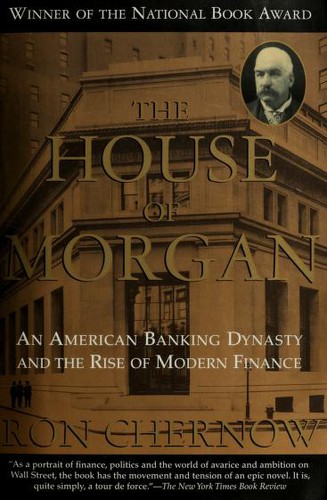
What I learned from reading The House of Morgan: An American Banking Dynasty and the Rise of Modern Finance by Ron Chernow. [0:01] This book is about the rise, fall, and resurrection of an American banking empire—the House of Morgan. [1:56] What gave the House of Morgan its tantalizing mystery was its government links. Much like the Rothschilds it seemed insinuated into the power structure of many countries, especially the United States. [2:46] They practiced a brand of banking that has little resemblance to standard retail banking. [3:43] They have weathered wars and depressions, scandals and hearings, bomb blasts and attempted assassinations. [4:44] Contrary to the usual law of perspective, the Morgans seem to grow larger as they recede in time. [5:41] I was struck that the old Wall Street—elite, clubby, and dominated by small, mysterious partnerships—bore scant resemblance to the universe of faceless conglomerates springing up across the globe. [6:49] Only one firm, one family, one name rather gloriously spanned the entire century and a half that I wanted to cover: J.P. Morgan. [8:13] I am a firm believer that most people who do great things are doing them for the first time. —Marc Andreessen [12:22] He carried the scars of early poverty. Like many who have overcome early hardship by brute force, he was always at war with the world and counting his injuries. [14:22] My capital is ample but I have passed too many money panics unscathed, not to have seen how often large fortunes are swept away, and that even with my own I must use caution. [14:48] His annual savings were staggering. He spent only $3,000 of a total annual income of $300,000. [18:05] J.P’s dad’s advice: You are commencing upon your business career at an eventful time. Let what you now witness make an impression not to be eradicated. Slow and sure should be the motto of every young man. [18:40] Junius Morgan reminds me of Tywin Lannister. [21:19] Perhaps the contrast between his own steady nature and Pierpont’s unruly temper made Junius fret unduly about his boy. With granite will, he began to mold Pierpont. [23:03] The Rothschilds are mentioned 30 times in this book. They had an influence on how Junius wanted to set up the Morgan family. [25:08] Junius lectured Pierpont: Never, under any circumstances, do an action which could be called in question if known to the world. [25:55] The railroads were the Internet of their day: More than just isolated businesses, railroads were the scaffolding on which new worlds would be built. [27:41] Not for the last time, Pierpont contemplated retirement. He would assume tremendous responsibility, then feel oppressed. He never seemed to take great pleasure in his accomplishments. He craved a restful but elusive peace. [29:50] He made over $1 million, boasting to Junius: I don’t believe there is another concern in the country that can begin to show such a result. [31:19] He believed that he knew how the economy should be ordered and how people should behave. [32:24] He had trouble delegating authority and low regard for the intelligence of other people. “The longer I live the more apparent becomes the absence of brains.” [33:48] Under his stern facade, Junius adored Pierpont; the obsessive grooming was a tacit acknowledgement of his son’s gifts. [35:36] Pierpont was, by nature, a laconic man. He had no gift for sustained analysis; his genius was in the brief, sudden brainstorm. [38:40] Pierpont found Jack soft and rather passive, lacking the sort of gumption he had as a young man. [40:40] Pierpont was extremely attentive to details and took pride in the knowledge that he could perform any job in the bank. “I can sit down at any clerk’s desk, take up his work here he left it and go on with it. I don’t like being at any man’s mercy.” He never renounced the founder’s itch to know the most minute details of the business. [41:31] The years change, but the point always remains the same: Morgan benefits from financial crises. [42:14] Virtually every bankrupt railroad east of the Mississippi eventually passed through such reorganization, or morganization, as it was called. The companies’ combined revenues approached an amount equal to half of the U.S. government’s annual receipts. [45:22] He has the driving power of a locomotive. He suggested something brutish and uncontrollable, but also something of superhuman strength. [47:04] Carnegie celebrated too quickly. He later admitted to Morgan that he had sold out too cheap, by $100 million. Morgan replied, “Very likely, Andrew.” [52:15] McKinley’s assassination would be a turning point in Pierpont’s life, for it installed in the presidency Theodore Roosevelt. Book: The Hour of Fate: Theodore Roosevelt, J.P. Morgan, and the Battle to Transform American Capitalism [53:05] The 1907 panic was Pierpont’s last hurray. He suddenly functioned as America’s central bank. He saved several trust companies and a leading brokerage house, bailed out New York City, and rescued the Stock Exchange. [54:33] Contemporaries saw Morgan as the incarnation of pure will. [1:02:39] This was Pierpont in a nutshell: He represented bondholders and expressed their wrath against irresponsible management. [1:07:37] Andrew Carnegie after J. P. Morgan died: And to think he was not a rich man. ---- Founders Notes gives you the ability to tap into the collective knowledge of history's greatest entrepreneurs on demand. Use it to supplement the decisions you make in your work. Get access to Founders Notes here. ---- “I have listened to every episode released and look forward to every episode that comes out. The only criticism I would have is that after each podcast I usually want to buy the book because I am interested so my poor wallet suffers. ” — Gareth Be like Gareth. Buy a book: All the books featured on Founders Podcast
“The book discusses the history of the House of Morgan and its significance in American finance, reflecting on the author's journey in writing it.”
Sentiment: Deep Dive
Trigger: history of American banking
For: Readers interested in financial history and banking evolution
Key quote:“The story of the Morgan banks is nothing less than the history of Anglo-American finance itself.”
The host mentions 'The House of Morgan' to illustrate the profound impact the Morgan banking dynasty had on Anglo-American finance over 150 years. The book serves as a lens through which to understand the evolution of Wall Street from elite partnerships to modern conglomerates.
“Ron Chernow's biography on Alexander Hamilton served as the basis for the popular musical Hamilton by Lin-Manuel Miranda.”
Sentiment: Deep Dive
Trigger: biography of J.P. Morgan
For: Readers interested in financial history and biography
Key quote:“Ron wrote biographies on George Washington, General Grant, Alexander Hamilton.”
The host discusses Ron Chernow's biography of Alexander Hamilton to highlight the author's impressive career and the significance of his first book. Chernow's work not only laid the foundation for his future successes but also inspired the popular musical 'Hamilton' by Lin-Manuel Miranda.
“The speaker mentions having read Ron Chernow's biography on John D. Rockefeller, indicating it as a significant work.”
Sentiment: Deep Dive
Trigger: Ron Chernow's biography style
For: Readers interested in financial history and biography
Key quote:“I did his wonderful, his masterpiece, his biography on John D. Rockefeller.”
The host mentions Ron Chernow's biography of John D. Rockefeller to highlight Chernow's impressive writing career and the depth of research he undertakes. This reference serves to emphasize the significance of Chernow's first book and its impact on his subsequent works.
“The speaker compares Junius to Tywin Lannister from 'Game of Thrones', noting similarities in their views on legacy and family name.”
Sentiment: Deep Dive
Trigger: family legacy and discipline
For: Fans of historical narratives and 'Game of Thrones' enthusiasts
Key quote:“Junius reminds me a lot of Tywin Lannister.”
The host draws a parallel between Junius Morgan's strict upbringing of his son JP and the character Tywin Lannister from 'Game of Thrones'. This comparison highlights the theme of prioritizing family legacy and the harsh lessons imparted to ensure the family's name endures through generations.
“The excerpt discusses the life and challenges of J.P. Morgan, including his relationship with his father and the pressures he faced as a banker.”
Sentiment: Deep Dive
Trigger: American banking empire
For: Readers interested in financial history and banking
Key quote:“This book is about the rise, fall, and resurrection of an American banking empire, the House of Morgan.”
The host discusses the intricate history and influence of the House of Morgan, highlighting its significant role in American finance and its connections to powerful families and government. This book provides a detailed exploration of the banking empire's operations and its impact on both national and international affairs.
“The excerpt mentions several sentences in the book, indicating a focus on Pierpont Morgan's power during financial crises.”
Sentiment: Deep Dive
Trigger: JP Morgan's financial strategies
For: Individuals interested in financial history and economic power dynamics.
Key quote:“Pierpont Morgan's power flourished during the steep industrial recession that began in 1893.”
The host discusses the significant influence of Pierpont Morgan during financial crises, as detailed in the book 'The Years Changed.' The book illustrates how Morgan capitalized on economic downturns to consolidate power and control over bankrupt railroads.
“I just read the biography and covered a few weeks ago, Joseph Pulitzer. And he, we see a sensitivity. He's a very sensitive person.”
Sentiment: Deep Dive
Trigger: JP Morgan's business dealings
For: Readers interested in historical biographies and the nuances of influential figures in American business.
Key quote:“He was a very sensitive person.”
The host discusses the complexities of JP Morgan's character and business practices, referencing the biography of Joseph Pulitzer to illustrate Morgan's sensitivity to public perception. The anecdotes shared highlight the interplay between Morgan's personal insecurities and his professional life, providing a humorous yet insightful look into his persona.
“The speaker reflects on the main takeaway from the book, emphasizing the power derived from financial strength and the dynamics of banking.”
Sentiment: Deep Dive
Trigger: American banking empire
For: Readers interested in financial history and banking
Key quote:“This book is about the rise, fall, and resurrection of an American banking empire, the House of Morgan.”
The host discusses the intricate history and influence of the House of Morgan, highlighting its role in American finance and its connections to powerful families and government. This book provides a comprehensive look at how this banking institution shaped economic and political landscapes.

%22%2F%3E%0A%20%20%3Crect%20x%3D%2218%22%20y%3D%2218%22%20width%3D%22204%22%20height%3D%228%22%20rx%3D%224%22%20fill%3D%22%2360a5fa%22%20opacity%3D%220.9%22%2F%3E%0A%20%20%3Crect%20x%3D%2218%22%20y%3D%2240%22%20width%3D%22204%22%20height%3D%222%22%20rx%3D%221%22%20fill%3D%22%2360a5fa%22%20opacity%3D%220.55%22%2F%3E%0A%20%20%3Ctext%20x%3D%2222%22%20y%3D%22194%22%20font-size%3D%2284%22%20font-weight%3D%22700%22%20fill%3D%22%23eff6ff%22%20font-family%3D%22system-ui%2C%20-apple-system%2C%20Segoe%20UI%2C%20sans-serif%22%3ETH%3C%2Ftext%3E%0A%20%20%3Ctext%20x%3D%2222%22%20y%3D%22268%22%20font-size%3D%2218%22%20fill%3D%22%23eff6ff%22%20opacity%3D%220.95%22%20font-family%3D%22system-ui%2C%20-apple-system%2C%20Segoe%20UI%2C%20sans-serif%22%3EThe%20House%20of%20Morgan%2C%20An%20%3C%2Ftext%3E%0A%20%20%3Ctext%20x%3D%2222%22%20y%3D%22292%22%20font-size%3D%2213%22%20fill%3D%22%23eff6ff%22%20opacity%3D%220.82%22%20font-family%3D%22system-ui%2C%20-apple-system%2C%20Segoe%20UI%2C%20sans-serif%22%3ERon%20Chernow%3C%2Ftext%3E%0A%3C%2Fsvg%3E)

%22%2F%3E%0A%20%20%3Crect%20x%3D%2218%22%20y%3D%2218%22%20width%3D%22204%22%20height%3D%228%22%20rx%3D%224%22%20fill%3D%22%2394a3b8%22%20opacity%3D%220.9%22%2F%3E%0A%20%20%3Crect%20x%3D%2218%22%20y%3D%2240%22%20width%3D%22204%22%20height%3D%222%22%20rx%3D%221%22%20fill%3D%22%2394a3b8%22%20opacity%3D%220.55%22%2F%3E%0A%20%20%3Ctext%20x%3D%2222%22%20y%3D%22194%22%20font-size%3D%2284%22%20font-weight%3D%22700%22%20fill%3D%22%23f8fafc%22%20font-family%3D%22system-ui%2C%20-apple-system%2C%20Segoe%20UI%2C%20sans-serif%22%3EJD%3C%2Ftext%3E%0A%20%20%3Ctext%20x%3D%2222%22%20y%3D%22268%22%20font-size%3D%2218%22%20fill%3D%22%23f8fafc%22%20opacity%3D%220.95%22%20font-family%3D%22system-ui%2C%20-apple-system%2C%20Segoe%20UI%2C%20sans-serif%22%3EJohn%20D.%20Rockefeller%3C%2Ftext%3E%0A%20%20%3Ctext%20x%3D%2222%22%20y%3D%22292%22%20font-size%3D%2213%22%20fill%3D%22%23f8fafc%22%20opacity%3D%220.82%22%20font-family%3D%22system-ui%2C%20-apple-system%2C%20Segoe%20UI%2C%20sans-serif%22%3ERon%20Chernow%3C%2Ftext%3E%0A%3C%2Fsvg%3E)