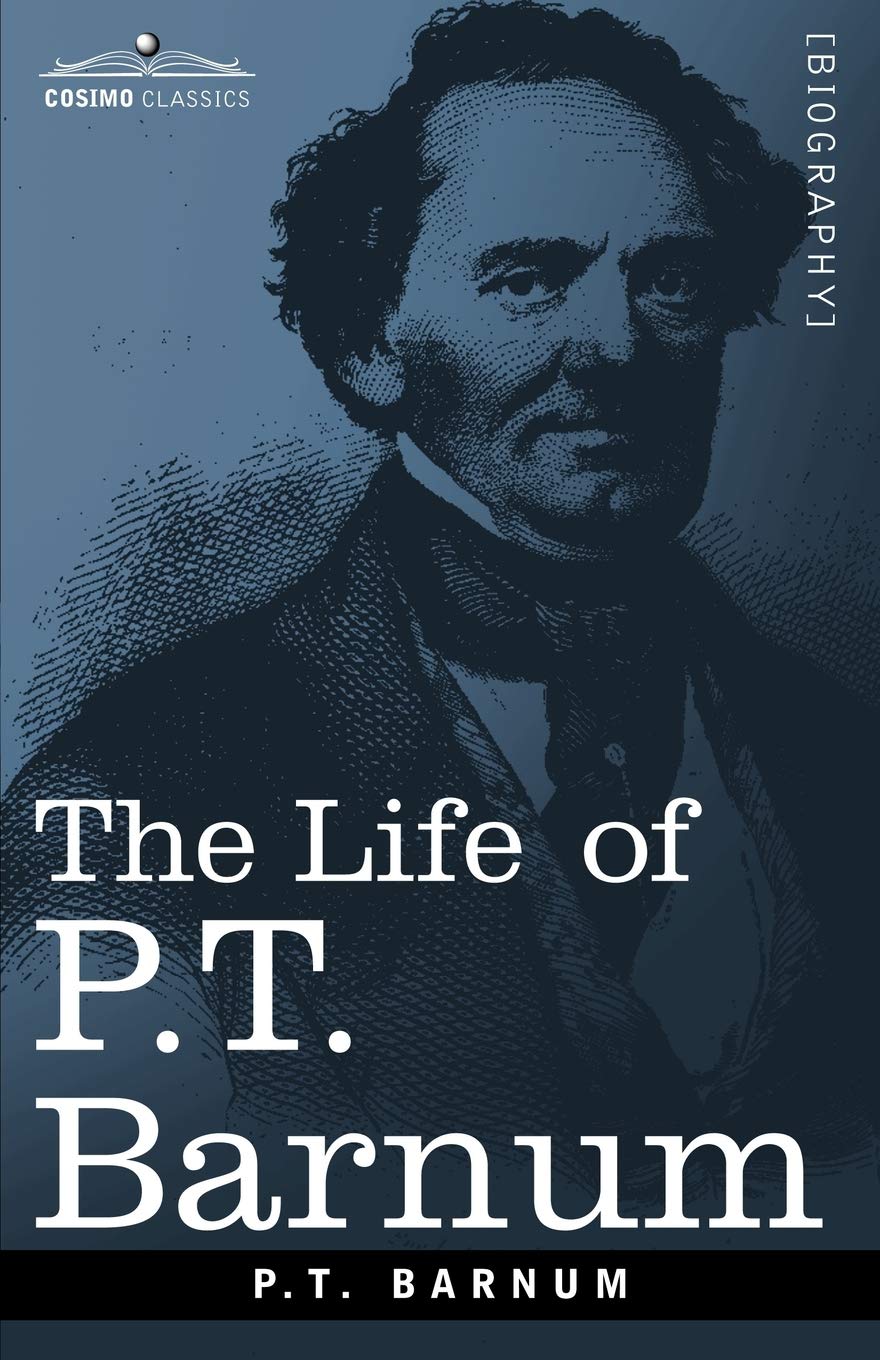
What I learned from reading Barnum: An American Life by Robert Wilson. ---- [1:23] He is known today primarily for his connection to the circus, but that came only in the last quarter of his long life. Less well known is that he was also a best-selling author, an inspirational lecturer on temperance and on success in business, a real-estate developer, a builder, a banker, a state legislator, and the mayor of Bridgeport, Connecticut. [1:54] In all endeavors he was a promoter and self-promotor without peer, a relentless advertiser and an unfailingly imaginative concoctor of events to draw the interest of potential patrons. [3:16] Through hard work, a lot of brass, and a genius for exploiting new technologies related to communication and transportation, he became world famous and wealthy beyond his dreams. [3:54] He led a rich, event-filled, exhilarating life, one indeed characterized by both struggles and triumphs. His life is well worth knowing. [5:36] Barnum’s was 16 when his father died, leaving his family with debts: Barnum remembered the family returning from the cemetery “to our desolate home, feeling that we were forsaken by the world, and that but little hope existed for us this side of the grave.” [6:22] He knew even then that he would only be happy working for himself. [7:56] Like most persons who engage in a business which they do not understand, we were unsuccessful in the enterprise. [8:16] He is running a lottery and learns something he will use later in his career: He began to develop his insight into the complicated nature of his customers, a realization that outwardly respectable people might have interests that were not entirely respectable. [11:06] The day he became a showman. He starts a newspaper, gets sued for libel, goes to jail, and organizes a parade on the day he is released: His ability to marshal not just his own paper but also the goodwill of others was a harbinger of things to come. It was the first example of his flair for drawing attention to his beliefs, his enterprises, and himself. [13:48] Seemingly small but consequential details would never elude him. [14:15] His lottery business is outlawed by the state legislature. He is broke: He blamed himself for his situation, writing that “the old proverb, ‘Easy come, easy go,’ was too true in my case.” Still, he was confident in his ability to make money. [17:03] I fell into the occupation, and far beyond any of my predecessors on this continent, I have succeeded. [18:42] Up and Down, Down and Up: He struggled to find further success in the years that followed. Barnum would spend much of the five years after on the road with various acts. “I was thoroughly disgusted with the life of an itinerant showman.” [20:03] Broke again at 31: Barnum later wrote, “I began to realize, seriously, that I was at the very bottom of fortune’s ladder, and that I had now arrived at an age when it was necessary to make one grand effort to raise myself above want.” [22:00] The clever way he is able to get the money to buy the American Museum: He decided to seek out the retired merchant who owned the building in which the museum was housed, with the quixotic goal of persuading him to buy the collection for him on credit, arguing that he would be a more reliable tenant than the struggling Scudder family (the current owners of the museum). This, against all odds, Barnum was able to do. [23:52] The customers he wanted and how he positioned his product: Barnum wanted to attract this rising middle class. They had more money and were more likely to spend it on wholesome activities, and with their higher rates of literacy, they were more susceptible to newspaper advertising. [28:05] How Barnum planned and publicized his show. The details and machinations are amazing. [35:47] He doesn’t rest on his laurels. After becoming successful in America he decides to expand to Europe: The challenge was the new place itself, a place that had no notion of who P.T. Barnum was. Whether or not he would succeed in the land of his forebears would be a test for Barnum of his own worth, of how far he had come and how far he might yet go. [38:05] Barnum told him that a person must “make thirty hours out of twenty-four or he would never get ahead.” [40:40] His drinking became a problem, so he quit: Making a resolution not to drink and then keeping it took both discipline and self-awareness and constituted another serious effort to turn his marriage and himself around. [42:54] We are all promoters. Estee Lauder was a promoter of beauty, Larry Ellison was a promoter of the efficiency gains of software and of winning, Henry Ford was a promoter of service, Claude Shannon was a promoter of following your own curiosity. Promoting is just sharing what you love. [43:55] Barnum promoted wholesome, good, family fun and entertainment. He built a wonderful life for himself just off that very simple idea, that I am going to promote various forms of entertainment so people can enjoy their time. I think that is a very simple idea and if you take it to extremes like Barnum did you can build a life around that. [44:29] Barnum is never focused on the obvious. He is always focused on 2nd order effects. [47:49] Barnum’s house: Iranistan [48:23] Barnum goes bankrupt at 50!: When his projects relied on his instincts and experience as a showman, they tended to be successful. But when he was tempted by schemes in areas where he was less familiar, the results were uneven. I think this is a reminder of what Charlie Munger and Warren Buffett told us: Stay within your circle of competence. [50:26] Down and depressed: He added that he was “once more nearly at the bottom of the ladder.” He wrote that his “own constitution through the excitements of the last few months, has most seriously failed.” He was understandably if uncharacteristically, “in the depths.” [52:02] I did it before. I’ll do it again: “I feel competent to earn an honest livelihood for myself and family.” He was, and had every right to be, proud of the things he had accomplished largely on his own, and that pride and the self-confidence that went with it were not likely to evaporate even in this moment of distress. [54:34] To give you an idea of how world famous Barnum was in his day: His autobiography sold over a million copies. That’s insane! [56:55] Mark Twain began an after dinner habit of reading from Barnum’s autobiography. The book made an impression on Twain, encouraging him in the years ahead as he promoted himself as a public lecturer and writer. [59:27] Barnum competes with Bailey and his impressed: Barnum was impressed by how well the three younger men had turned the tables on him, using his own methods. “Foes worthy of my steel,” he called them. The aging showman realized he had finally met his match, and he concluded it would be wiser to join them than to compete with them. ---- Founders Notes gives you the ability to tap into the collective knowledge of history's greatest entrepreneurs on demand. Use it to supplement the decisions you make in your work. Get access to Founders Notes here. ---- “I have listened to every episode released and look forward to every episode that comes out. The only criticism I would have is that after each podcast I usually want to buy the book because I am interested so my poor wallet suffers. ” — Gareth Be like Gareth. Buy a book: All the books featured on Founders Podcast
“The excerpt discusses the life of P.T. Barnum, highlighting his journey and contributions, and introduces the book 'P.T. Barnum, An American Life' by Robert Wilson.”
Sentiment: Deep Dive
Trigger: P.T. Barnum's life
For: Readers interested in American history and biography
Key quote:“His is a life well worth knowing and celebrating.”
The host discusses P.T. Barnum's multifaceted life, highlighting his achievements beyond the circus, including his roles as a promoter and author. The mention of the book serves to provide a deeper understanding of Barnum's character and the societal context of his time.
“Barnum later wrote a book called the book of the year, which he wrote about his experiences during a difficult period of his life.”
Sentiment: Passing Reference
Trigger: Barnum's financial struggles
For: Readers interested in personal growth and historical figures
Key quote:“Barnum later wrote a book called the book of the year.”
The host mentions 'the book of the year' as a reflection of Barnum's life during a challenging period. It highlights Barnum's realization of his dire financial situation and his determination to make a significant change.
“The author quotes heavily from Barnum's own autobiography, where he reflects on his purpose in displaying the mermaid as a means of advertising his museum.”
Sentiment: Deep Dive
Trigger: P.T. Barnum's early life
For: Readers interested in American history and entrepreneurship
Key quote:“It made me feel that it was quite amazing, a man of substance.”
The host discusses P.T. Barnum's early life and entrepreneurial spirit, highlighting his struggles and triumphs. The mention of Barnum's own autobiography serves to provide insight into his character and motivations during his formative years.
“One of them is The Art of Money Making, I think, Money Getting. And he was a great... He'll give a lecture on that.”
Sentiment: Deep Dive
Trigger: Barnum's financial misfortune
For: Entrepreneurs and business enthusiasts
Key quote:“He just starts giving these lectures.”
The host discusses how Barnum's financial struggles led him to reinvent himself as a public lecturer, sharing insights from his experiences. He specifically mentions 'The Art of Money Getting' as a key work that encapsulates Barnum's rules for business success derived from his life lessons.
“published a list in his 1853 book, A Practical Treatise on Business.”
Sentiment: Deep Dive
Trigger: Barnum's financial misfortune
For: Entrepreneurs and business students
Key quote:“the basis for the talk would be a list of 10 rules for business success that Barnum had created, this is a few years in the past, for a prolific Philadelphia author named Edwin Friedley, who published a list in his 1853 book, A Practical Treatise on Business.”
The host discusses how Barnum's financial struggles led him to reinvent himself as a public lecturer, drawing from lessons he learned during his hardships. He mentions Edwin Friedley's book as a source of inspiration for Barnum's rules for business success.
“Barnum's autobiography sold over a million copies in the 1800s, leading to unexpected positive externalities, including influencing others' success.”
Sentiment: Deep Dive
Trigger: Barnum's career and influence
For: Readers interested in business success and historical figures
Key quote:“One of them is he meets he winds up.”
The host discusses Barnum's transition into public lecturing and the impact of his autobiography on his life and others. The mention of the autobiography highlights how it not only chronicled his experiences but also influenced notable figures like John Fish.
“The excerpt discusses how Samuel Clements, known as Mark Twain, was influenced by Barnum's autobiography, 'Struggles and Triumphs', which he read and found encouraging.”
Sentiment: Deep Dive
Trigger: P.T. Barnum's life story
For: Readers interested in American history and personal success stories.
Key quote:“He led a rich, event-filled, exhilarating life, one indeed characterized by both struggles and triumphs.”
The host discusses P.T. Barnum's multifaceted life, highlighting his struggles and triumphs as a self-made man. The mention of 'Struggles and Triumphs' serves to underscore the themes of resilience and success in Barnum's journey.

%22%2F%3E%0A%20%20%3Crect%20x%3D%2218%22%20y%3D%2218%22%20width%3D%22204%22%20height%3D%228%22%20rx%3D%224%22%20fill%3D%22%2394a3b8%22%20opacity%3D%220.9%22%2F%3E%0A%20%20%3Crect%20x%3D%2218%22%20y%3D%2240%22%20width%3D%22204%22%20height%3D%222%22%20rx%3D%221%22%20fill%3D%22%2394a3b8%22%20opacity%3D%220.55%22%2F%3E%0A%20%20%3Ctext%20x%3D%2222%22%20y%3D%22194%22%20font-size%3D%2284%22%20font-weight%3D%22700%22%20fill%3D%22%23f8fafc%22%20font-family%3D%22system-ui%2C%20-apple-system%2C%20Segoe%20UI%2C%20sans-serif%22%3EPB%3C%2Ftext%3E%0A%20%20%3Ctext%20x%3D%2222%22%20y%3D%22268%22%20font-size%3D%2218%22%20fill%3D%22%23f8fafc%22%20opacity%3D%220.95%22%20font-family%3D%22system-ui%2C%20-apple-system%2C%20Segoe%20UI%2C%20sans-serif%22%3EP.T.%20Barnum%2C%20An%20American%3C%2Ftext%3E%0A%20%20%3Ctext%20x%3D%2222%22%20y%3D%22292%22%20font-size%3D%2213%22%20fill%3D%22%23f8fafc%22%20opacity%3D%220.82%22%20font-family%3D%22system-ui%2C%20-apple-system%2C%20Segoe%20UI%2C%20sans-serif%22%3ERobert%20Wilson%3C%2Ftext%3E%0A%3C%2Fsvg%3E)