Back to search

FoundersMay 25, 2020
#127 Larry Ellison (Oracle)
Listen
About This Episode
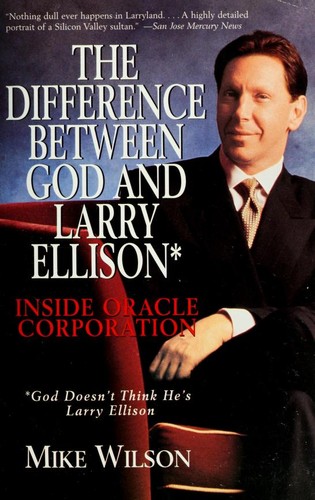
What I learned from reading The Difference Between God and Larry Ellison: God Doesn't Think He's Larry Ellison by Mike Wilson ---- [1:06] You want to know what I think about Larry Ellison? Well, I suppose he had some private sort of greatness but he kept it to himself. He never gave himself away. He never gave anything away. He just left you a tip. He had a generous mind. I don’t suppose anybody ever had so many opinions, but he never believed in anything except Larry Ellison. [1:45] That was the way Ellison’s mind worked. He was like a search engine gone haywire. [3:01] I asked Ellison how he had seen his adult life when he was a kid. What he thought was going to happen to him. “You mean did I anticipate becoming the fifth wealthiest person in the United States? No. This is all kind of surreal. I don’t even believe it. When I look around I say this must be something out of a dream.” [3:57] Ellison is the Charles Foster Kane of the technological age. He is bright, brash, optimistic, and immensely appealing, yet somehow incomplete. [4:31] He worked in the computer industry for several years but never had a job that suited what he saw as his superior intellectual gifts. [6:08] The stockholder who benefited the most from Oracle’s performance was Larry Ellison, exactly what he intended. Ellison started the company because he wanted to be his own boss. And he stayed in control throughout his tenure at Oracle always holding onto enough stock that his power and authority could never be seriously challenged. [7:57] To him there was now power greater than the human mind. [8:23] What Larry reminds me of is a truth that Benjamin Franklin hit on 250 years ago. He says his mind was much improved by all the reading he did. There were very tangible results in Benjamin Franklin’s life when people found his conversations more enjoyable because he was a more interesting person to talk to—that led him being able to raise money for his business. It helped him close sales. Larry Ellison is very much the same way. [8:53] When hiring, Ellison valued intelligence more than experience. He often looked for unruly geniuses instead of solid, steady workers. [10:52] If he hadn’t made me rich, I’d probably hate him because he is obnoxious. He is not nice to people. [12:39] He was capable of chilling selfishness and inspiring generosity. He could dazzle people with his insights and madden them with his lies. He was a fundamentally shy man who could delight audiences with his colorful speeches. He was known for his healthy ego and often seemed deeply insecure. Many people learned to accept Ellison’s contradictory nature. [14:01] In 1970 sales of packaged computer programs amounted to only $70 million for the entire year. [15:55] There is a book called The HP Way. I did a podcast on it (Founders #29) [16:20] The Oracle Way was simply to win. How that goal was achieved was secondary. [17:18] Ellison’s early life left a lot to be desired. He was never very happy with the humdrum facts of his life so he changed them. Beginning when he was a child, and continuing into his days in the Forbes 400, Ellison lived partly in a world of his own invention. [18:15] He wasn’t going to be smothered by the dreary circumstances of his life. He was going to leap over them. [20:13] Larry reads a lot of biographies. One person he admired the most was Winston Churchill. He had a lot in common with Churchill. Both were mediocre students. Both desperately sought the approval of their fathers to no avail. And both were witty, insatiably curious, and charming when it suited them. Reading about Churchill reassured him that even ‘gods have moments of insecurity.’ [22:30] A description of Larry in his mid twenties: Ellison was extremely hard on himself. He had a mental image of where he should be and what he should be and he was not able to attain it. [25:19] He has incredible intelligence and he applies it with incredible intensity. [26:44] The subject he liked best was himself. He was forever telling people how wonderful he was, how smart he was, and how rich he was going to be. [29:50] For Ellison Oracle was a holy mission. [30:33] There was a problem. A sheet rock wall stood between the offices and the computer room. Scott said, “Larry, we need to hook up these terminals. How are we going to hook them up?” “I'll show you how.” Ellison replied. He grabbed a hammer and smashed a hole through the wall. Bruce Scott came to believe that Ellison's entire business philosophy could be summed up in that single act. Find a way or make one. Just do it. [32:41] Ellison could not have dreamed up a more amiable and helpful competitor than IBM. Think of the marketing of relational technology as a race, with Ellison and IBM as two of the main entrants. IBM taught Ellison to walk, bought him a pair of track shoes, trained him as a sprinter, and then gave him a big head start. How could he lose? [35:14] He was practicing. He was working. He knew there was a problem and he fixed it. [35:47] The idea that somebody else might take away Oracle's business was poison to Ellison. He understood the importance of locking up a large share of the market early. “How much does it cost Pepsi to get one half of a percent of the market from Coke once the market has been established?” he once asked rhetorically. “It's very expensive. This market is being established. If we don't run as hard as we can, as fast as we can, and then do it again twice as fast, it’ll be cost prohibitive for us to increase market share.” [36:14] Larry put marketing first and everything else second. Average technology and good marketing beat good technology and average marketing every day. [39:17] My view is that there are only a handful of things that are really important and you should devote all of your time to those things and forget everything else. [40:46] I was not terribly forgiving of mediocrity. I was completely intolerant of a lack of effort. And I was fairly brutal in the way I expressed myself. [41:16] Kobe Bryant: I had issues or problems with the people who don’t demand excellence from themselves. I won’t tolerate that. [42:30] The guy that was in charge of Oracle’s advertising in the early days of the company: My ads attack like a pack of speed crazed wolverines and have the same general effect on your competition that a full moon does on a werewolf. [44:00] Larry fundamentally believed that his company was going to be more important than IBM. You can’t imagine how far fetched those ideas sounded. He would say he was here to become the largest software company in the world. People were taken aback. [45:32] Larry goes against consensus. Every single on of his advisors told him sell equity, sell equity, sell equity. And Larry just had a fundamental belief that that would be a mistake because the equity is going to be worth a lot more in the future. [46:21] There are only two kinds of people in the world to Larry. Those who are on his team and those who are his enemies. There is no middle ground. [48:03] Even when he was feeling his worst Ellison remained an optimist. A man who couldn’t help looking forward. He lived in the future. [49:34] He was terrified he would fail, confirming his father’s dark predictions about him. There was a note in his voice that you didn’t usually hear with him—just scared, worried. [56:30] I am very competitive, and sometimes, when somebody does something really great, I get upset because I just feel like that isn’t me. And my reaction to Steve [Jobs] wasn’t competitive at all. I felt what he had done was so wonderful, and I was so proud of him, and I love him so much, it was almost as if I had done it. I didn’t feel the least bit competitive. The wonderful thing about loving somebody else is that it can expand your ego in the best sense. If they do something great, you feel terrific about it. [57:38] The only things that are important in our lives are love and work. Not necessarily in that order. We work because work is an act of creation. We identify with it. Both love and work conspire to deliver some kind of happiness. If we can get reasonably good at both of them, we are in really great shape. [58:21] He’s got the same problem the rest of us have. He has to engage in an enlightened pursuit of happiness. To figure out what makes him happy. Human beings are builders. He is going to have to find something he really wants to build. He is going to have to have some idea and create something out of that idea. ---- Founders Notes gives you the ability to tap into the collective knowledge of history's greatest entrepreneurs on demand. Use it to supplement the decisions you make in your work. Get access to Founders Notes here. ---- “I have listened to every episode released and look forward to every episode that comes out. The only criticism I would have is that after each podcast I usually want to buy the book because I am interested so my poor wallet suffers. ” — Gareth Be like Gareth. Buy a book: All the books featured on Founders Podcast
Book Mentions
4 book mentions in this episode.
Jump to booksTip: Click “Mentioned at …” to copy a timestamp.
Tip: Click a cover image to open a book link.
Books Mentioned
The Difference Between God and Larry Ellison
Mike Wilson
“The speaker discusses a book titled 'The Difference Between God and Larry Ellison', which explores the character of Larry Ellison in relation to Charlie Kane from Citizen Kane.”
Sentiment: Deep Dive
Trigger: Larry Ellison's character analysis
For: Readers interested in business personalities and character studies
Key quote: “The reason I started with this section is the author's trying to get to pin down Larry.”
The host discusses the complexities of Larry Ellison's personality as portrayed in the book. They emphasize how the author uses comparisons to illustrate Ellison's elusive nature and self-centeredness.
ASIN: N/A
Buy on AmazonClick the book cover image to open the affiliate link.
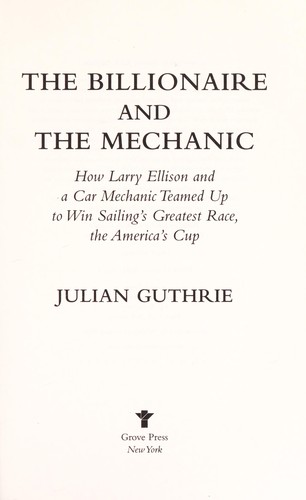
“The excerpt references a book titled 'The Billionaire and The Mechanic', discussing themes of ambition and personal transformation.”
Sentiment: Deep Dive
Trigger: Larry Ellison's early life
For: Readers interested in biographies of successful entrepreneurs
Key quote: “He has incredible intelligence and he applies it with incredible intensity.”
The host discusses Larry Ellison's struggles and relationships during his early years, highlighting the intensity of his character and ambition. This context leads to a mention of 'The Billionaire and The Mechanic' as it provides deeper insights into Ellison's life and personality.
ASIN: N/A
Buy on AmazonClick the book cover image to open the affiliate link.
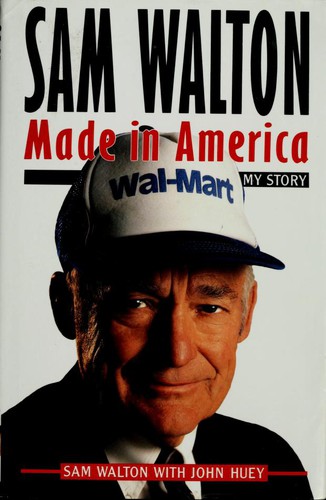
“One thing I learned from the autobiography of Sam Walton is that you should have a bias for action and then you stay determined.”
Sentiment: Highly Recommended
Trigger: bias for action
For: Entrepreneurs and business leaders
Key quote: “One thing I learned from the autobiography of Sam Walton is that you should have a bias for action and then you stay determined.”
The host highlights the importance of taking initiative and being persistent, lessons drawn from Sam Walton's autobiography. This book serves as a guide for those looking to adopt a proactive mindset in their endeavors.
ASIN: N/A
Buy on AmazonClick the book cover image to open the affiliate link.
The Everything Store
Brad Stone
“The author discusses how Jeff Bezos borrowed ideas from the autobiography of Sam Walton, which emphasizes a bias for action.”
Sentiment: Deep Dive
Trigger: bias for action
For: Entrepreneurs and business leaders
Key quote: “One thing I learned from the autobiography of Sam Walton is that you should have a bias for action and then you you stay determined right and that's something uh jeff bezos uh definitely borrowed from from reading that book as well because it's talked about in brad stone's book the everything store.”
The host mentions 'The Everything Store' to highlight how Jeff Bezos adopted a bias for action, a principle emphasized in Sam Walton's autobiography. This concept is linked to Larry Ellison's success, showcasing the importance of seizing opportunities and acting decisively in business.
ASIN: B00FJFJOLC
Buy on AmazonClick the book cover image to open the affiliate link.