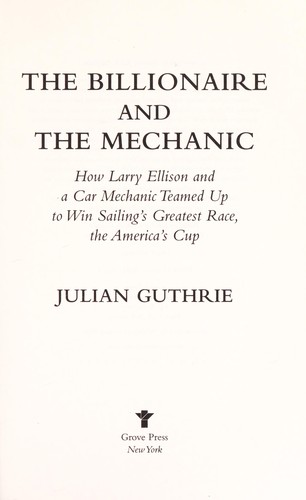
What I learned from reading The Billionaire and the Mechanic: How Larry Ellison and a Car Mechanic Teamed up to Win Sailing's Greatest Race, the America’s Cup, Twice by Julian Guthrie. ---- [0:01] Larry Ellison to Steve Jobs: I’m talking about greatness, about taking a lever to the world and moving it. I’m not talking about moral perfection. I’m talking about people who changed the world the most during their lifetime. [0:56] Larry’s choice for history’s greatest person could not have been more different from Gandhi (Steve Jobs’s choice): the military leader Napoleon Bonaparte. [3:15] Steve liked to say the Beatles were his management model — four guys who kept each other in check and produced something great. [3:47] Larry’s favorite history book was Will and Ariel Durant’s The Age of Napoleon, which he had read several times. Like his buddy Steve, and like Larry himself, Napoleon was an outsider who was told he would never amount to anything. [6:09] Now the book is technically about the America’s Cup race. But that is not really what it is about. This books gives insights into extreme winners. [7:50] Steve and Larry had found they had much in common. They both had adoptive parents. Both considered their adoptive parents their real parents. Both were “OCD,” and both were antiauthoritarian. They shared a disdain for conventional wisdom and felt people too often equated obedience with intelligence. They never graduated from college, and Steve loved to boast that he’d left Reed College after just two weeks while it took others, including Larry and their rival Bill Gates, months or even years to drop out. [9:09] Steve Jobs: “Why do people buy art when they can make their own art?” Larry thought for a moment and replied, “Well , Steve , not everyone can make his own art. You can. It’s a gift.” [10:46] What he (Steve Jobs) liked was designing and redesigning things to make them more useful and more beautiful. [11:02] If Michael Jordan sold enterprise software he would be Larry Ellison. Larry is addicted to winning. [12:38] An idea I learned from Steve was the further you get away from one the more complexity you are inviting in. [13:20] Larry was a voracious reader who spent a great deal of time studying science and technology, but his favorite subject was history. He learned more about human nature, management, and leadership by reading history than by reading books about business. [14:52] His adopted Dad said over and over again to Larry, “You are a loser. You are going to amount to nothing in life.” [15:19] Larry treats life like an adventure. [15:26] He envied how Graham’s parents supported him on his adventure, as this was the opposite of his own life. The story of Graham transported Larry from the regimentation of high school to the adventure and freedom of the sea. Here was a boy alone at sea for weeks at a stretch; dealing with storms, circling sharks, and broken masts; visiting exotic locales. Through it all he was his own navigator.That is definitely the way Larry approached his life. [18:04] Why Larry uses competition as a way to test himself: He wanted to see just how much better a sailor he had become. It will be an interesting test. There was a clarity to be found in sports that couldn’t be had in business. At Oracle he still wanted to beat the rivals IBM and Microsoft, but business was a marathon without end; there was always another quarter. In sports , the buzzer sounds and time runs out. [18:50] It is not what two groups do a like that matters. It's what they do differently that's liable to count. —Charles Kettering [22:20] Why test yourself: After the laughter died down Larry turned serious. “Why do we do these things? George Mallory said the reason he wanted to climb Everest was because ‘it’s there.’ I don’t think so. I think Mallory was wrong. It’s not because it’s there. It’s because we’re there, and we wonder if we can do it.” [24:11] Larry’s personality: He didn’t like letting them have control. It was the same reason he didn’t have a driver, and it was why he liked to pilot his own planes and why he had been married and divorced three times. He didn’t like being told what he could and couldn’t do. [26:04] With any new thing you do in your life, you are going to have to overcome people telling you that you are an idiot. [28:08] While Ellison demanded absolute loyalty, he did not always return it. The people he liked best were the ones who were doing something for him. The people he hired were all geniuses until the day they resigned—when in Ellison's view— they became idiots or worse. [29:44] What Larry is reading during the dot com bubble collapse: The books on his nightstand included Fate Is the Hunter: A Pilot’s Memoir by Ernest Gann, The Jordan Rules by Sam Smith, and William Manchester’s multivolume biography of Winston Churchill. [30:25] Whenever Larry felt remotely close to being at risk of failure he couldn’t stop working. [30:58] I’m going to read you one of the funniest paragraphs I have ever read. The guy Larry is talking to is insane: In the dot—com heyday he got a call from Farzad Nazem, who used to work at Oracle and was now a top executive at Yahoo. Nazem told Larry, “Disney wants to merge with us. Why would we ever want to do something like that? What have they got?” Larry answered his old friend, “Gee , let me think. They have the most valuable film library in the world, the most valuable TV channels in world, and successful theme parks everywhere. Disney makes tons of money and they’re probably the most beloved brand on the planet. Now, what have you got? A Web page with news on it and free e-mail. Has everyone gone crazy ?” [32:38] Oracle has been around for 40 years. How many companies can survive 40+ years? [33:00] One of the key insights I took away from Larry is this idea about game within a game. I'm glad I'm reading these books about Larry Ellison at the same time I watched this 10 part documentary on Michael Jordan (The Last Dance) because I think both Jordan and Ellison figured out something that is fundamental to our nature. I don't think hey were not setting out to try to figure out something fundamental about human nature. They did so in their own process of self discovery. They hack themselves by creating games within games. They understand over a long period of time that your motivations, your dedication, your discipline is going to ebb and flow and they had to find a way to hack themselves. [38:19] There is one sentence that sums up Larry’s personality: “Winning. That is my idea of fun.” [38:38] There are a lot of extreme winners on Larry’s team. That is one of the things I like most about the book. It gives you insights into their mindset, how they prepare for their sport—which I think is applicable to whatever you do for a living. [40:00] Dixon said, “Larry, my advice is that we go out there tomorrow to try to win the race. We will probably get beaten and you should be prepared to lose gracefully.” Larry was stunned by the suggestion. After a long pause, he said that he could be gracious after losing, but wasn't capable of being gracious while he was losing, he had come here to win. [42:00] The Vince Lombardi line Larry loves: Every team in the National Football League has has the talent necessary to win the championship. It's simply a matter of what you're willing to give up. Then Lombardi looked at them and said, I expect you to give up everything, and he left the room. [42:25] Give me human will and the intense desire to win, and it will trump talent every day of the week. [43:05] His lack of interest in marriage was not about fidelity, but had more to do with problems he had with authority. In marriage, he had to live a good part of his life the way the other person wanted him to live it. Larry wanted to live his life his way. This part reminds me of what we learned on the podcast I did on Frank Lloyd Wright. [44:17] His favorite Japanese saying was, “Your garden is not complete until there is nothing else you can take out of it.” [44:44] Rafael Nadal asked how Larry had made his life such a success. Larry launched into a long philosophical musing about how innovation in technology is quite often based on finding errors in conventional wisdom, and when you find an error you have to have the courage take a different approach even when everyone else says you’re wrong. Then Larry abruptly stopped himself. “Forget everything I just said. The answer is simple. I never give up.” [46:09] He was incapable of waving the white flag. [46:24] Kobe Bryant: A young player should not be worried about his legacy. Wake up, identify your weakness and work on that. Go to sleep, wake up, and do that all over again. 20 years from now, you'll look back and see your legacy for yourself. That's life. [46:47] Larry is constantly willing to put himself in uncomfortable situations so he can improve. [49:00] One of Larry’s favorite maxims was: “The brain’s primary purpose is deception, and the primary person to be deceived is the owner.” [49:07] How does his favorite Maxim relate to why he likes sports? Because in sports, you can't deceive yourself. He just said the brain's primary purpose is to deceive yourself—so he needs to hack himself. He needs to have his game within a game, so he is incapable of deceiving himself. Larry liked having opponents, even enemies. “I learn a lot about myself when I compete against somebody. I measure myself by winning and losing. Every shot in basketball is clearly judged by an orange hoop — make or miss. The hoop makes it difficult to deceive yourself.” [49:56] The insight is if we do something really hard we won’t have any competition. [52:26] The athletes Larry knew were obsessed with the game they played. They were like his friend Steve Jobs who worried about the color of the screws inside a computer. [53:12] They reminded Larry of a line from Tombstone: Wyatt Earp asks Doc Holliday,“ What makes a man like Ringo, Doc? What makes him do the things he does?” Doc replies, “A man like Ringo has got a great big hole, right in the middle of him. He can never kill enough, or steal enough, or inflict enough pain to ever fill it.” For better and worse, Larry had the same hole, and he tried to fill it by winning. But as soon as he closed in on one of his goals, he immediately set another difficult and distant goal. In that way, he kept moving the finish line just out of reach. [54:31] Back home, standing by the lake where he and Steve had debated things great and small, Larry was certain that decades from now there would be two guys walking somewhere, talking about their icons. Steve would be mentioned. He would be one of those “misfits, rebels, troublemakers, the round pegs in square holes, the ones who see things differently,” words popularized in Apple’s “Think Different” ad campaign. Steve would be remembered as one of those with “no respect for the status quo.” [59:16] Those moments are my most cherished and enduring memories of my time with Steve. The four of us sitting together at Kona, eating papayas and laughing for no reason at all. I'll miss those times. Goodbye, Steve. [1:00:00] Larry’s nightmare: In Larry’s mind, it fed into a culture based on a homogenized egalitarian ethos where everyone was the same, where there are no winners and no losers, and where there are no more heroes. [1:02:21] Larry says something to Russell (the guy running his team). It echoes what Charles Kettering said last week: It is not what two people do the same that matters. It is what they do differently. Larry says, “You already have a job, Russell. You've got to figure out why we're so damn slow, our set another way. Why is New Zealand so fast? What are they doing that we're not? [1:03:08] Don’t give up before you absolutely have to. Stay in problem solving mode: Larry was not happy when he heard that speeches were being written and plans being made for the handover of the Cup, but he ignored it all until he was asked to settle an argument over who was going to give the concession speech during the handover. “Let me get this straight: people are fighting over who gets to give the concession speech? I don’t give a fuck who gives the concession speech. If we lose, everyone who wants to give a concession speech can give a concession speech. But we haven’t lost yet. Why don’t we focus on winning the next fucking race , rather than concession speeches.” Larry, a licensed commercial pilot with thousands of hours flying jets, likened their situation to a plane in distress. When pilots have a serious emergency, they immediately go into problem solving mode, and they stay in that mode until the problem is solved — or until just before impact. In that final moment, the aircraft’s cockpit voice recorder captures the pilot’s brief concession speech. There are two versions of the speech, one secular, one not: “Oh God ” and “ Oh shit.” Larry had not yet reached his “Oh God” or “Oh shit” moment. Down 8 points to 1, he remained in problem solving mode. [1:06:19] As Muhammad Ali once said, “It’s just a job. Grass grows, birds fly, waves pound the sand. I beat people up.” No one was going to live or die on the basis of these things. But contests were his best teachers. At some point, one person gets measured against another. They find out who wins and who doesn’t, and along the way they learn something about themselves. Larry had learned that he loved the striving, the facing of setbacks, and the trying again. [1:07:56] It’s hard for me to quit when I’m losing — and it’s hard for me to quit when I’m winning. It’s just hard for me to quit. I’m addicted to competing. ---- Founders Notes gives you the ability to tap into the collective knowledge of history's greatest entrepreneurs on demand. Use it to supplement the decisions you make in your work. Get access to Founders Notes here. ---- “I have listened to every episode released and look forward to every episode that comes out. The only criticism I would have is that after each podcast I usually want to buy the book because I am interested so my poor wallet suffers. ” — Gareth Be like Gareth. Buy a book: All the books featured on Founders Podcast
“Larry's favorite history book was Will and Ariel Durant's The Age of Napoleon, which he had read several times.”
Sentiment: Highly Recommended
Trigger: Napoleon's impact on history
For: History enthusiasts and those interested in leadership dynamics.
Key quote:“Larry's favorite history book was Will and Ariel Durant's The Age of Napoleon, which he had read several times.”
Larry mentioned 'The Age of Napoleon' as his favorite history book, highlighting Napoleon's duality as a military genius and a transformative administrator. This book serves as a lens to understand the complexities of Napoleon's character and his significant contributions to modern France.
“The book that I'm going to talk to you about today is The Billionaire and the Mechanic, which is about Larry Ellison and a car mechanic who teamed up to win sailing's greatest race, the America's Cup, twice.”
Sentiment: Highly Recommended
Trigger: Larry Ellison and Steve Jobs
For: Readers interested in entrepreneurship and the mindset of successful individuals.
Key quote:“Just from that one page, I knew immediately I had to read the book.”
The host mentions 'The Billionaire and the Mechanic' as a key resource for understanding the dynamics between Larry Ellison and Steve Jobs. The book not only covers their friendship but also provides insights into the mindset of extreme winners, making it a compelling read.
“Larry read Isaacson's book on Steve Jobs, and he says the biggest critique is that Isaacson didn't let Jobs be irreplaceable.”
Sentiment: Passing Reference
Trigger: greatness and historical figures
For: Individuals interested in leadership and historical impact
Key quote:“I'm talking about greatness, about taking a lever to the world and moving it.”
The host mentions the book 'Steve Jobs' in the context of discussing influential figures who have changed the world. Jobs is referenced as part of a conversation about greatness and moral versus military leadership.
“Larry was enthralled by a National Geographic story about a boy named Robin Lee Graham, the youngest person to solo circumnavigate the globe, titled A Teenager Sails the World Alone.”
Sentiment: Deep Dive
Trigger: Larry's inspiration from sailing
For: Readers interested in personal development and the influence of childhood experiences on adult behavior.
Key quote:“The story of Graham transported Larry from the regimentation of high school to the adventure and freedom of the sea.”
The host mentions 'A Teenager Sails the World Alone' to illustrate how Larry's early life experiences and inspirations shaped his competitive nature and approach to life. The book serves as a pivotal reference point for understanding Larry's admiration for adventure and independence, contrasting with his upbringing.
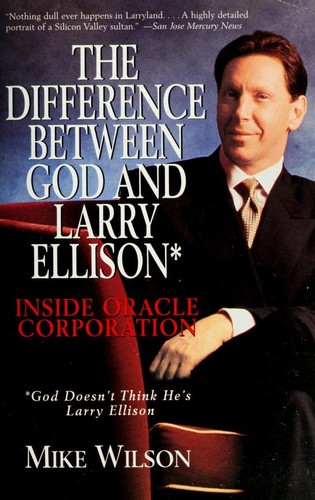
“Madeline wanted to understand what her husband was up against, so she picked up the biography, The Difference Between God and Larry Ellison.”
Sentiment: Deep Dive
Trigger: Larry Ellison's business strategies
For: Business professionals and entrepreneurs
Key quote:“The Oracle way was simply to win.”
The host mentions the book to highlight how it provides insight into Larry Ellison's competitive nature and business incentives. It serves as a backdrop for understanding the dynamics of a deal involving Ellison and the yacht club, illustrating the complexities of his character and motivations.
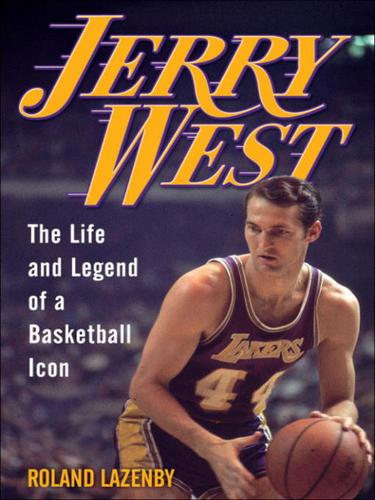
“Larry came to understand the charmed tormented life of athletes by reading an autobiography. Jerry West actually, it's the subtitle of that's the subtitle of the book that that that Larry read.”
Sentiment: Highly Recommended
Trigger: mindset of extreme winners
For: Individuals interested in sports psychology and the mindset of successful people.
Key quote:“Larry loves this book and he counts Jerry West among his heroes.”
The host mentions the book 'Jerry West' to highlight the insights it provides into the mindset of successful athletes. Larry Ellison found clarity in sports through West's autobiography, which resonated with his own experiences and ambitions.
“Larry reads Isaacson's book and questions why Isaacson wouldn't let Steve be a hero, reflecting on the portrayal of Steve in the book.”
Sentiment: Critical Analysis
Trigger: Larry Ellison and Steve Jobs
For: Readers interested in biographies and the dynamics of tech leaders
Key quote:“Larry's biggest critique is that Isaacson didn't let Jobs be irreplaceable.”
The host discusses the contrasting personalities and business approaches of Larry Ellison and Steve Jobs, referencing Isaacson's book on Jobs. The mention highlights a critique that Jobs was portrayed as less irreplaceable than he truly is, according to Ellison's perspective.
“After reading two and a half books on Ellison, the speaker interprets it as Ellison's nightmare, relating it to the discussion about Steve.”
Sentiment: Critical Analysis
Trigger: Larry's reaction to Isaacson's book
For: Readers interested in leadership and cultural narratives
Key quote:“The author made Steve replaceable.”
The host discusses Larry's disappointment with Isaacson's portrayal of Steve Jobs, feeling it undermines his heroic status. This leads to a broader reflection on the cultural implications of viewing individuals as replaceable in a homogenized society.
“Larry's response to being down 8 to 1 is a really important lesson from the book. He ignored the concession speech discussions and focused on winning the next race.”
Sentiment: Deep Dive
Trigger: Larry's response to challenges
For: Individuals interested in sports psychology and resilience
Key quote:“Larry's response to being down 8 to 1 is a really important lesson from the book.”
The host discusses how Larry's mindset during a critical moment in a race reflects the themes of resilience and problem-solving found in 'The Greatest Comeback in Sports.' This book illustrates the importance of overcoming adversity to achieve success, which resonates with Larry's approach to being down in the race.
“The speaker mentions having read 126 books and references a link to buy a book that supports the podcast.”
Sentiment: Highly Recommended
Trigger: addiction to winning
For: Individuals interested in personal development and competitive sports.
Key quote:“That's 126 books down, 1,000 to go.”
The host mentions '126 books down' to emphasize the ongoing journey of personal growth and learning through competition. It highlights the importance of understanding one's motivations and the lessons learned from both success and failure.

%22%2F%3E%0A%20%20%3Crect%20x%3D%2218%22%20y%3D%2218%22%20width%3D%22204%22%20height%3D%228%22%20rx%3D%224%22%20fill%3D%22%2360a5fa%22%20opacity%3D%220.9%22%2F%3E%0A%20%20%3Crect%20x%3D%2218%22%20y%3D%2240%22%20width%3D%22204%22%20height%3D%222%22%20rx%3D%221%22%20fill%3D%22%2360a5fa%22%20opacity%3D%220.55%22%2F%3E%0A%20%20%3Ctext%20x%3D%2222%22%20y%3D%22194%22%20font-size%3D%2284%22%20font-weight%3D%22700%22%20fill%3D%22%23eff6ff%22%20font-family%3D%22system-ui%2C%20-apple-system%2C%20Segoe%20UI%2C%20sans-serif%22%3ETA%3C%2Ftext%3E%0A%20%20%3Ctext%20x%3D%2222%22%20y%3D%22268%22%20font-size%3D%2218%22%20fill%3D%22%23eff6ff%22%20opacity%3D%220.95%22%20font-family%3D%22system-ui%2C%20-apple-system%2C%20Segoe%20UI%2C%20sans-serif%22%3EThe%20Age%20of%20Napoleon%3C%2Ftext%3E%0A%20%20%3Ctext%20x%3D%2222%22%20y%3D%22292%22%20font-size%3D%2213%22%20fill%3D%22%23eff6ff%22%20opacity%3D%220.82%22%20font-family%3D%22system-ui%2C%20-apple-system%2C%20Segoe%20UI%2C%20sans-serif%22%3EWill%20and%20Ariel%20Durant%3C%2Ftext%3E%0A%3C%2Fsvg%3E)