What I learned from reading Tao of Charlie Munger: A Compilation of Quotes from Berkshire Hathaway's Vice Chairman on Life, Business, and the Pursuit of Wealth With Commentary by David Clark How is it that Charlie—who trained as a meteorologist and a lawyer and never took a single college course in economics, marketing, finance, or accounting—became one of the greatest business and investing geniuses of the twentieth and twenty-first centuries? Therein lies the mystery. [0:44] Charlie Munger was learning this important investment skill while playing poker with his army buddies. That’s where he learned to fold his hand when the odds were against him and bet heavy when the odds were with him, a strategy he later adapted to investing. [11:12] Charlie thought a lot about business during that time. He made a habit of asking people what was the best business they knew of. He longed to join the rich elite clientele his silk-stocking law firm served. He decided that each day he would devote one hour of his time at the office to work on his own real estate projects, and by doing so he completed five. He has said that the first million dollars he put together was the hardest money he ever earned. It was also during that period that he realized he would never become really rich practicing law; he’d have to find something else. [12:18] Warren, in summing up Charlie’s impact on his investment style over the last fifty-seven years, said, “Charlie shoved me in the direction of not just buying bargains, as Ben Graham had taught me. This was the real impact that he had on me. It took a powerful force to move me on from Graham’s limiting view. It was the power of Charlie’s mind.” [15:33] Knowing what you don’t know is more useful than being brilliant. [17:39] “People are trying to be smart—all I am trying to do is not to be idiotic, but it’s harder than most people think.” [17:58] All good things in life come from compounding. [19:34] This important investment philosophy assumes that one is better off buying a business with exceptional business economics working in its favor and holding it for many years than engaging in a lot of buying and selling. [19:42] Charlie knows that time is a good friend to a business that has exceptional economics working in its favor, but for a mediocre business time can be a curse. [20:25] Andrew Carnegie says in his autobiography you should study how the great fortunes are made. It's not a scattershot approach. They identified the best business possible and they put all their energy and effort into it. That's certainly what Andrew Carnegie did. [22:39] Charlie makes the point that Berkshire Hathaway probably has the most successful investment record in humanity. That is a hell of a statement and he is probably right. [26:10] Charlie advocates keeping $10 million in cash, and Berkshire keeps $72 billion sitting around in cash, waiting for the right deal to show up. The lousy return their cash balances are getting is a trade-off—poor initial rate of return in exchange for years of high returns from finding excellent businesses selling at a fair price. This is an element of the Munger investment equation that is almost always misunderstood. Why? Because most investors cannot image that sitting on a large pool of cash year after year, waiting for the right investment, could possibly be a winning investment strategy, let alone one that would make them superrich. [27:11] “I think that, every time you see the word EBITDA, you should substitute the word ‘bullshit earnings.’ ” [28:52] You have to wait for the right company—one with a durable competitive advantage—that is selling at the right price. And when Charlie says wait, he means wait as long as it takes, which can mean years. Warren got out of the stock market in the late 1960s, and he waited five years before he found anything he was interested in buying. [31:10] When Charlie and Warren say that they intend to hold an investment forever, they mean forever! Who on Wall Street would ever make such a statement? That’s one of the reasons Charlie and Warren have never worried about anyone mimicking their investment style—because no other institution or individual has the discipline or patience to wait as long as they can. [31:46] Charlie and Warren’s theory is that a company with a durable competitive advantage has business economics that will expand the underlying value of the business over time, and the more time passes, the more the company’s value will expand. Thus, once the purchase is made, it is wisest to sit on the investment as long as possible, because the longer we own the company, the more it grows in value, and the more it grows in value, the richer we become. [34:48] “It is remarkable how much long-term advantage people like us have gotten by trying to be consistently not stupid, instead of trying to be very intelligent. There must be some wisdom in the folk saying: ‘It’s the strong swimmers who drown.’ ” [36:14] One is actually better off reading a hundred business biographies than a hundred books on investing. Why? Because if we learn the history of a hundred different business models, we learn when the businesses had tough times and how they got through them; we also learn what made them great, or not so great. [38:44] “In business we often find that the winning system goes almost ridiculously far in maximizing and or minimizing one or a few variables—like the discount warehouses of Costco.” [41:53] “If you’re not willing to react with equanimity to a market price decline of 50% two or three times a century you’re not fit to be a common shareholder and you deserve the mediocre result you’re going to get compared to the people who do have the temperament, who can be more philosophical about these market fluctuations.” [46:23] “Spend each day trying to be a little wiser than you were when you woke up. Discharge your duties faithfully and well. Slug it out one inch at a time, day by day. At the end of the day—if you live long enough—most people get what they deserve.” [48:42] He implemented a self-education regime for one hour a day to learn such things as real estate development and stock investing. It was slow going at first, but after a great number of years and thousands of books read, he started to see how different areas of knowledge interplay with each other and how knowledge, like money, can compound, making one more and more aware of the world in which he or she lives. He has often said that he is a much better investor at ninety than he was at fifty, a fact he attributes to the compounding effect of knowledge. [49:09] There is another point that I’ve noticed with men and women who truly excel at their craft or profession: they keep on learning and improving themselves long after most people would have retired. [54:02] “Look at this generation, with all of its electronic devices and multitasking. I will confidently predict less success than Warren, who just focused on reading. If you want wisdom, you’ll get it sitting on your ass. That’s the way it comes.” [54:16] “In my whole life, I have known no wise people who didn’t read all the time—none, zero. You’d be amazed at how much Warren reads—and how much I read. My children laugh at me. They think I’m a book with a couple of legs sticking out.” [55:04] “I constantly see people rise in life who are not the smartest, sometimes not even the most diligent, but they are learning machines. They go to bed every night a little wiser than they were when they got up, and boy, does that help, particularly when you have a long run ahead of you.” [55:22] ---- Founders Notes gives you the ability to tap into the collective knowledge of history's greatest entrepreneurs on demand. Use it to supplement the decisions you make in your work. Get access to Founders Notes here. ---- “I have listened to every episode released and look forward to every episode that comes out. The only criticism I would have is that after each podcast I usually want to buy the book because I am interested so my poor wallet suffers. ” — Gareth Be like Gareth. Buy a book: All the books featured on Founders Podcast
“A compilation of quotes from Berkshire Hathaway's vice chairman on life, business, and the pursuit of wealth. The speaker found it impactful and highly recommended.”
Sentiment: Highly Recommended
Trigger: Charlie Munger's philosophy
For: Individuals interested in business philosophy and investing
Key quote:“The Tao of Charlie Munger by David Clark is easily the most impactful book I've read over the past five years.”
The host mentions 'The Tao of Charlie Munger' as a highly impactful book that serves as an introduction to Charlie Munger's insights on life and business. The recommendation stems from a tweet that praised the book, prompting the host to read it and find it compelling enough to share with listeners.
“Mentioned as another book that will be discussed in future episodes about Charlie Munger.”
Sentiment: Highly Recommended
Trigger: Charlie Munger's influence
For: Individuals interested in business and investing
Key quote:“One of them being Poor Charlie's Almanac, which is huge.”
The host mentions 'Poor Charlie's Almanac' as a significant work that outlines Charlie Munger's philosophy and approach to business. This book serves as a foundational text for understanding Munger's mindset, making it essential for anyone interested in his ideas.
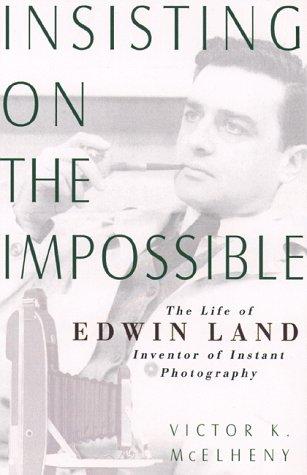
“A biography of Edwin Land that the speaker recommends for understanding influential figures like Steve Jobs.”
Sentiment: Highly Recommended
Trigger: Influence of Edwin Land
For: Entrepreneurs and business leaders
Key quote:“I said, hey, you really should read his book or read the book, the biography of him called Insisting on the Impossible.”
The host mentions 'Insisting on the Impossible' to highlight the significant influence Edwin Land had on prominent figures like Steve Jobs. This book serves as a crucial resource for understanding the foundational ideas that shaped these influential entrepreneurs.
“Recommended for its lessons on human adaptability and overcoming hardships, particularly relevant for entrepreneurs.”
Sentiment: Highly Recommended
Trigger: resilience in adversity
For: Readers interested in history and personal resilience
Key quote:“I'd recommend reading The Last Highlander. It teaches you what humans are able to adapt and overcome.”
The host mentions 'The Last Highlander' to highlight the importance of studying historical struggles and the resilience of the human spirit. This book serves as a powerful reminder of what individuals can endure and overcome in the face of extreme adversity.
“A personal account of survival during World War II, highlighting human resilience and adaptability.”
Sentiment: Highly Recommended
Trigger: resilience in adversity
For: entrepreneurs and individuals facing challenges
Key quote:“At 98 years of age, he wrote the book, the last highlander to inspire others to persevere when they are faced with hardships in their life.”
The host mentions 'A Forgotten Highlander' to illustrate the extreme hardships faced by individuals during wartime and how these experiences can provide perspective on personal struggles. The book serves as a powerful reminder of human resilience and adaptability, making it relevant for those facing challenges in their own lives.
“Charlie Munger is very against this idea of fast money. He doesn't believe in it. And his quote is the desire to get rich fast is pretty dangerous.”
Sentiment: Highly Recommended
Trigger: Charlie Munger's influence
For: Individuals interested in business and investing, especially those new to Charlie Munger.
Key quote:“The Tao of Charlie Munger by David Clark is easily the most impactful book I've read over the past five years.”
The host mentions 'The Tao of Charlie Munger' as a highly impactful book that offers insights into Munger's philosophy on life and business. The recommendation stems from a tweet that praised the book, prompting the host to read it and find it compelling enough to share with the audience.
“Now we're going to hear the author expound David Clark expound on that. He says, trying to get rich fast is dangerous because we have to gamble on the short-term price direction of some stock or other asset.”
Sentiment: Highly Recommended
Trigger: Charlie Munger's influence
For: Individuals interested in business philosophy and investing
Key quote:“The Tao of Charlie Munger by David Clark is easily the most impactful book I've read over the past five years.”
The host mentions 'The Tao of Charlie Munger' by David Clark as a highly impactful book that offers insights into Charlie Munger's philosophy on life and business. The recommendation stems from a tweet that praised the book, prompting the host to read it and find it compelling enough to share with listeners.
“He says it's about multivariable nonlinear systems. I read it when I was 25 or 26. I had a profound impact on high C model systems, economies, businesses, opportunities, investments.”
Sentiment: Highly Recommended
Trigger: multivariable nonlinear systems
For: Individuals interested in complex systems and their applications.
Key quote:“I read it when I was 25 or 26.”
The host reflects on the significant influence this book had on their understanding of complex systems. They emphasize its relevance to various fields such as economies and investments.
“Another one of my favorite quotes from the Big Short comes from the same guy Steve actually signed the book.”
Sentiment: Deep Dive
Trigger: financial crisis analysis
For: investors and business professionals
Key quote:“the one sentence description of the financial crisis was they mistook leverage for genius.”
The host references 'The Big Short' to highlight the importance of understanding leverage in the context of financial crises. They emphasize Charlie Munger's insights on being conservative with leverage and adapting to changing circumstances in business and life.

%22%2F%3E%0A%20%20%3Crect%20x%3D%2218%22%20y%3D%2218%22%20width%3D%22204%22%20height%3D%228%22%20rx%3D%224%22%20fill%3D%22%234ade80%22%20opacity%3D%220.9%22%2F%3E%0A%20%20%3Crect%20x%3D%2218%22%20y%3D%2240%22%20width%3D%22204%22%20height%3D%222%22%20rx%3D%221%22%20fill%3D%22%234ade80%22%20opacity%3D%220.55%22%2F%3E%0A%20%20%3Ctext%20x%3D%2222%22%20y%3D%22194%22%20font-size%3D%2284%22%20font-weight%3D%22700%22%20fill%3D%22%23f0fdf4%22%20font-family%3D%22system-ui%2C%20-apple-system%2C%20Segoe%20UI%2C%20sans-serif%22%3EPC%3C%2Ftext%3E%0A%20%20%3Ctext%20x%3D%2222%22%20y%3D%22268%22%20font-size%3D%2218%22%20fill%3D%22%23f0fdf4%22%20opacity%3D%220.95%22%20font-family%3D%22system-ui%2C%20-apple-system%2C%20Segoe%20UI%2C%20sans-serif%22%3EPoor%20Charlie%26apos%3Bs%20Almanac%3C%2Ftext%3E%0A%20%20%3Ctext%20x%3D%2222%22%20y%3D%22292%22%20font-size%3D%2213%22%20fill%3D%22%23f0fdf4%22%20opacity%3D%220.82%22%20font-family%3D%22system-ui%2C%20-apple-system%2C%20Segoe%20UI%2C%20sans-serif%22%3EPodcastMentions%3C%2Ftext%3E%0A%3C%2Fsvg%3E)