What I learned from reading The Pmarca Blog Archive Ebook by Marc Andreessen. ---- [0:01] In this series of posts I will walk through some of my accumulated knowledge and experience in building high-tech startups. [3:15] Great things about doing a startups: Most fundamentally, the opportunity to be in control of your own destiny — you get to succeed or fail on your own, and you don’t have some bozo telling you what to do. For a certain kind of personality, this alone is reason enough to do a startup. The opportunity to create something new — the proverbial blank sheet of paper. You have the ability — actually, the obligation— to imagine a product that does not yet exist and bring it into existence, without any of the constraints normally faced by larger companies. The opportunity to have an impact on the world — to give people a new way to communicate, a new way to share information, a new way to work together, or anything else you can think of that would make the world a better place. The ability to create your ideal culture and work with a dream team of people you get to assemble yourself. Want your culture to be based on people who have fun every day and enjoy working together? Or, are hyper-competitive both in work and play? Or, are super-focused on creating innovative new rocket science. And finally, money —startups done right can of course be highly lucrative. This is not just an issue of personal greed — when things go right, your team and employees will themselves do very well and will be able to support their families, send their kids to college, and realize their dreams, and that’s really cool. And if you’re really lucky, you as the entrepreneur can ultimately make profound philanthropic gifts that change society for the better. [5:15] However, there are many more reasons to not do a startup. [5:28] First, and most importantly, realize that a startup puts you on an emotional rollercoaster unlike anything you have ever experienced. You will flip rapidly from a day in which you are euphorically convinced you are going to own the world, to a day in which doom seems only weeks away and you feel completely ruined, and back again.Over and over and over. [6:04] Some days things will go really well and some things will go really poorly. And the level of stress that you’re under generally will magnify those transient data points into incredible highs and unbelievable lows at whiplash speed and huge magnitude. [6:42] The best thing about startups: you only ever experience two emotions, euphoria and terror, and I find that a lack of sleep enhances them both. [7:09] In a startup, absolutely nothing happens unless you make it happen. [8:19] As a founder of a startup trying to hire your team, you’ll run into this again and again: When Jim Clark decided to start a new company in 1994, I was one of about a dozen people at various Silicon Valley companies he was talking to about joining him in what became Netscape. I was the only one who went all the way to saying “yes” (largely because I was 22 and had no reason not to do it). The rest flinched and didn’t do it. And this was Jim Clark, a legend in the industry who was coming off of the most successful company in Silicon Valley in 1994 —Silicon Graphics Inc. How easy do you think it’s going to be for you? [10:50] The fact is that startups are incredibly intense experiences and take a lot out of people in the best of circumstances. [14:03] And so you start to wonder—what correlates the most to success— team, product, or market? Or, more bluntly, what causes success? And, for those of us who are students of startup failure—what’s most dangerous: a bad team, a weak product, or a poor market? [15:16] If you ask entrepreneurs or VCs which of team, product, or market is most important, many will say team. This is the obvious answer, in part because in the beginning of a startup, you know a lot more about the team than you do the product, which hasn’t been built yet, or the market, which hasn’t been explored. [16:32] Personally, I’ll take the third position — I’ll assert that market is the most important factor in a startup’s success or failure. Why? In a great market — a market with lots of real potential customers— the market pulls product out of the startup. The market needs to be fulfilled and the market will be fulfilled, by the first viable product that comes along. [17:33] Conversely, in a terrible market, you can have the best product in the world and an absolutely killer team, and it doesn’t matter—you’re going to fail. [18:53] You can obviously screw up a great market — and that has been done, and not infrequently—but assuming the team is baseline competent and the product is fundamentally acceptable, a great market will tend to equal success and a poor market will tend to equal failure. Market matters most. [19:32] Markets that don’t exist don’t care how smart you are. [20:15] The only thing that matters is getting to product/market fit. [21:00] Lots of startups fail before product/market fit ever happens. My contention, in fact, is that they fail because they never get to product/market fit. [22:59] The most important thing you need to know going into any discussion or interaction with a big company is that you’re Captain Ahab, and the big company is Moby Dick. When Captain Ahab went in search of the great white whale Moby Dick, he had absolutely no idea whether he would find Moby Dick. What happened was entirely up to Moby Dick. And Captain Ahab would never be able explain to himself —or anyone else— why Moby Dick would do whatever it was he’d do. You’re Captain Ahab, and the big company is Moby Dick. [29:30] A startup’s initial business plan doesn’t matter that much, because it is very hard to determine up front exactly what combination of product and market will result in success. By definition you will be doing something new, in a world that is a very uncertain place. You are simply not going to know whether your initial idea will work as a product and a business, or not. And you will probably have to rapidly evolve your plan —possibly every aspect of it — as you go. [30:03] It is therefore much more important for a startup to aggressively seek out a big market, and product/market fit within that market, once the startup is up and running, than it is to try to plan out what you are going to do in great detail ahead of time. The history of successful startups is quite clear on this topic. [38:38] The point is this: If Thomas Edison didn’t know what he had when he invented the photograph while he thought he was trying to create better industrial equipment for telegraph operators. . .what are the odds that you—or any entrepreneur— is going to have it all figured out up front? [40:00] The first rule of career planning: Do not plan your career. The world is an incredibly complex place and everything is changing all the time. You can’t plan your career because you have no idea what’s going to happen in the future. Career planning = career limiting. [40:46] The second rule of career planning: Instead of planning your career, focus on pursuing opportunities. [41:06] Opportunities that present themselves to you are the consequence— at least partially — of being in the right place at the right time. They tend to present themselves when you’re not expecting it —and often when you are engaged in other activities that would seem to preclude you from pursuing them. And they come and go quickly — if you don’t jump all over an opportunity, someone else generally will and it will vanish. [42:40] I am continually amazed at the number of people who are presented with an opportunity and pass. There’s your basic dividing line between the people who shoot up in their careers like a rocket ship, and those who don’t — right there. [42:58] I am also continually amazed at the number of people who coast through life and don’t go and seek out opportunities even when they know in their gut what they’d really like to do. Don’t be one of those people. Life is way too short. [43:17] The world is a very malleable place. If you know what you want, and you go for it with maximum energy and drive and passion, the world will often reconfigure itself around you much more quickly and easily than you would think. [50:44] There may be times when you realize that you are dissatisfied with your field — you are working in enterprise software, for example, but you’d really rather be working on green tech or in a consumer Internet company. Jumping from one field into another is always risky because your specific skills and contacts are in your old field, so you’ll have less certainty of success in the new field. This is almost always a risk worth taking– standing pat and being unhappy about it has risks of its own, particularly to your happiness. And it is awfully hard to be highly successful in a job or field in which one is unhappy. [52:52] Finally, pay attention to opportunity cost at all times. Doing one thing means not doing other things. This is a form of risk that is very easy to ignore, to your detriment. [53:33] Marc’s final takeaway for thinking about opportunities: If you really are high-potential, you’re naturally going to be seeking out risks in your career in order to maximize your level of achievement. [55:46] Graduating with a technical degree is like heading out into the real world armed with an assault rifle instead of a dull knife. [56:19] Don’t worry about being a small fish in a big pond—you want to always be in the best pond possible, because that is how you will get exposed to the best people and the best opportunities in your field. [58:26] Capitalism rewards things that are both rare and valuable. [56:52] Seek to be a double/triple/quadruple threat. . .The fact is, this is even the secret formula to becoming a CEO. All successful CEO’s are like this. They are almost never the best product visionaries, or the best salespeople, or the best marketing people, or the best finance people, or even the best managers, but they are top 25% in some set of those skills, and then all of a sudden they’re qualified to actually run something important. [1:00:50] Learn how to sell. I don’t mean, learn how to sell someone a set of steak knives they don’t need — although I hear that can be quite an education by itself. I mean, learn how to convince people that something is in their best interest to do, even when they don’t realize it up front. [1:06:06] In my opinion, it’s now critically important to get into the real world and really challenge yourself — expose yourself to risk— put yourself in situations where you will succeed or fail by your own decisions and actions, and where that success or failure will be highly visible. Why? If you’re going to be a high achiever, you’re going to be in lots of situations where you’re going to be quickly making decisions in the presence of incomplete or incorrect information, under intense time pressure, and often under intense political pressure. You’re going to screw up — frequently — and the screwups will have serious consequences, and you’ll feel incredibly stupid every time. It can’t faze you — you have to be able to just get right back up and keep on going. That may be the most valuable skill you can ever learn. Make sure you start learning it early. [1:07:20] When picking an industry to enter, my favorite rule of thumb is this: Pick an industry where the founders of the industry—the founders of the important companies in the industry—are still alive and actively involved. ---- Founders Notes gives you the ability to tap into the collective knowledge of history's greatest entrepreneurs on demand. Use it to supplement the decisions you make in your work. Get access to Founders Notes here. ---- “I have listened to every episode released and look forward to every episode that comes out. The only criticism I would have is that after each podcast I usually want to buy the book because I am interested so my poor wallet suffers. ” — Gareth Be like Gareth. Buy a book: All the books featured on Founders Podcast
“Ben Horowitz is Mark Andreessen's business partner but he wrote a book called Hard Thing about Hard Things and one of my favorite exchanges in the book.”
Sentiment: Deep Dive
Trigger: startup challenges
For: Aspiring entrepreneurs and startup founders
Key quote:“You only ever experienced two emotions, euphoria and terror.”
The host mentions 'Hard Thing About Hard Things' to highlight the emotional roller coaster that entrepreneurs experience while building startups. The book provides insights into the intense highs and lows of startup life, emphasizing the necessity of personal effort in making things happen.
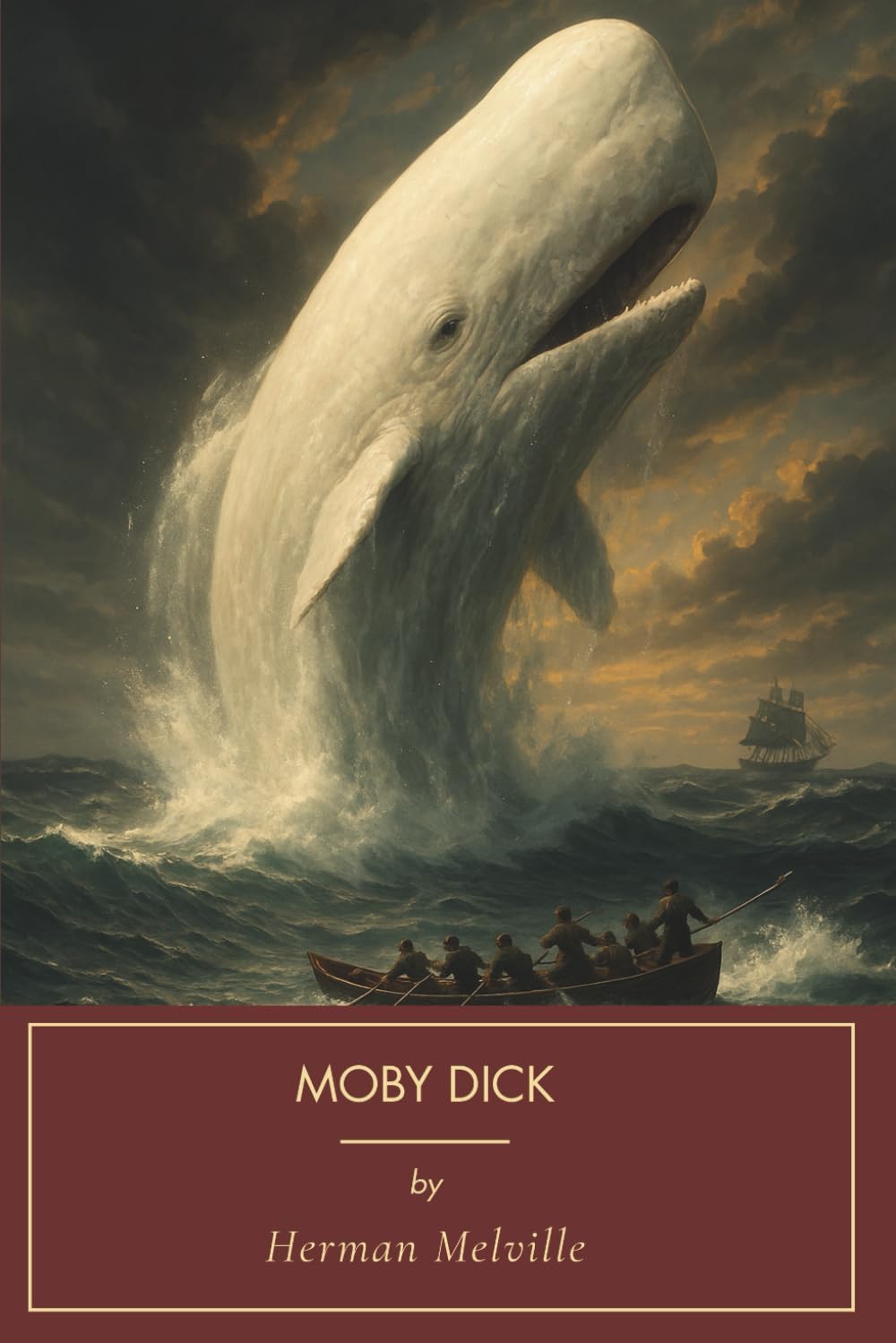
“The discussion compares the unpredictability of big companies to the elusive nature of Moby Dick, emphasizing the randomness in business dealings.”
Sentiment: Deep Dive
Trigger: startup challenges
For: Entrepreneurs and startup founders
Key quote:“The behavior of any big company is largely inexplicable when viewed from the outside.”
The host uses the metaphor of Moby Dick to illustrate the unpredictable nature of large companies when startups attempt to engage with them. By comparing Captain Ahab's quest to find Moby Dick to a startup's interactions with big companies, the host emphasizes the complexities and uncertainties involved in such relationships.
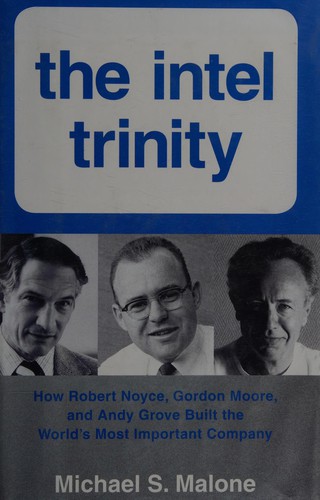
“The speaker mentions a podcast about 'The Intel Trinity' as a great book to learn more about Intel.”
Sentiment: Passing Reference
Trigger: importance of adapting business plans
For: Entrepreneurs and startup founders
Key quote:“So, if you want to learn more about Intel, I did a podcast on a great book called The Intel Trinity.”
The host mentions 'The Intel Trinity' while discussing the unpredictable nature of startups and how they must adapt their business plans. This book provides insights into Intel's evolution and the lessons that can be drawn from its history.
“The speaker discusses reading Randall Strauss' book about Thomas Edison, highlighting its fascinating content.”
Sentiment: Deep Dive
Trigger: startup business planning
For: Entrepreneurs and startup founders
Key quote:“However, I've recently been reading Randall Strauss' marvelous book about Thomas Edison, The Wizard of Menlo Park.”
The host mentions 'The Wizard of Menlo Park' to illustrate the unpredictable nature of innovation and the importance of adaptability in startups. By referencing Edison's journey, the host emphasizes that initial business plans may not be as crucial as finding product-market fit and evolving as necessary.
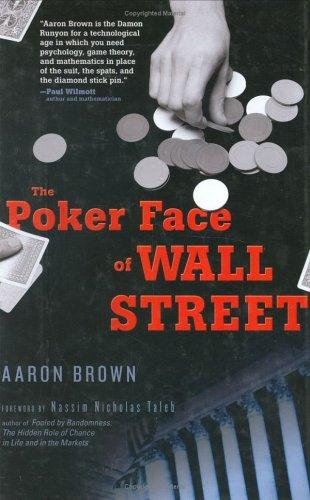
“Aaron Brown, a legendary Morgan Stanley derivatives trader, discusses the importance of recognizing and taking risks in his extraordinary book.”
Sentiment: Deep Dive
Trigger: career risk management
For: financial professionals and entrepreneurs
Key quote:“It's only important that she knew it was there, respected it, but took it anyway.”
The host mentions 'The Poker Face of Wall Street' to highlight how understanding and managing risk is crucial for career decisions. Aaron Brown's insights on risk-taking are used to illustrate the importance of evaluating opportunities within the broader context of one's career trajectory.
“A quote from Nassim Nicholas Taleb's 'The Black Swan' discusses recognizing opportunities and the rarity of lucky breaks in life.”
Sentiment: Deep Dive
Trigger: career risks and opportunities
For: Individuals considering career changes or seeking to maximize their professional opportunities.
Key quote:“They are rare, much rarer than you think.”
The host mentions 'The Black Swan' to emphasize the importance of recognizing rare opportunities in life and career. This book highlights how many people fail to see significant chances for advancement when they arise, which can lead to missed opportunities.
“Mark advises college students to read a provocative essay by David Brooks called The Organizational Kid, highlighting the structured lives of Ivy League students.”
Sentiment: Passing Reference
Trigger: importance of communication skills
For: College students from affluent backgrounds
Key quote:“We have in America a generation of students who are extraordinarily bright, morally earnest, and incredibly industrious.”
The host mentions 'The Organizational Kid' to highlight the pressures faced by high-achieving students from affluent backgrounds. This reference serves to illustrate the intense schedules and expectations that can lead to a lack of genuine happiness among these students.


%22%2F%3E%0A%20%20%3Crect%20x%3D%2218%22%20y%3D%2218%22%20width%3D%22204%22%20height%3D%228%22%20rx%3D%224%22%20fill%3D%22%234ade80%22%20opacity%3D%220.9%22%2F%3E%0A%20%20%3Crect%20x%3D%2218%22%20y%3D%2240%22%20width%3D%22204%22%20height%3D%222%22%20rx%3D%221%22%20fill%3D%22%234ade80%22%20opacity%3D%220.55%22%2F%3E%0A%20%20%3Ctext%20x%3D%2222%22%20y%3D%22194%22%20font-size%3D%2284%22%20font-weight%3D%22700%22%20fill%3D%22%23f0fdf4%22%20font-family%3D%22system-ui%2C%20-apple-system%2C%20Segoe%20UI%2C%20sans-serif%22%3ETW%3C%2Ftext%3E%0A%20%20%3Ctext%20x%3D%2222%22%20y%3D%22268%22%20font-size%3D%2218%22%20fill%3D%22%23f0fdf4%22%20opacity%3D%220.95%22%20font-family%3D%22system-ui%2C%20-apple-system%2C%20Segoe%20UI%2C%20sans-serif%22%3EThe%20Wizard%20of%20Menlo%20Park%3C%2Ftext%3E%0A%20%20%3Ctext%20x%3D%2222%22%20y%3D%22292%22%20font-size%3D%2213%22%20fill%3D%22%23f0fdf4%22%20opacity%3D%220.82%22%20font-family%3D%22system-ui%2C%20-apple-system%2C%20Segoe%20UI%2C%20sans-serif%22%3ERandall%20Strauss%3C%2Ftext%3E%0A%3C%2Fsvg%3E)

%22%2F%3E%0A%20%20%3Crect%20x%3D%2218%22%20y%3D%2218%22%20width%3D%22204%22%20height%3D%228%22%20rx%3D%224%22%20fill%3D%22%23a78bfa%22%20opacity%3D%220.9%22%2F%3E%0A%20%20%3Crect%20x%3D%2218%22%20y%3D%2240%22%20width%3D%22204%22%20height%3D%222%22%20rx%3D%221%22%20fill%3D%22%23a78bfa%22%20opacity%3D%220.55%22%2F%3E%0A%20%20%3Ctext%20x%3D%2222%22%20y%3D%22194%22%20font-size%3D%2284%22%20font-weight%3D%22700%22%20fill%3D%22%23f5f3ff%22%20font-family%3D%22system-ui%2C%20-apple-system%2C%20Segoe%20UI%2C%20sans-serif%22%3ETO%3C%2Ftext%3E%0A%20%20%3Ctext%20x%3D%2222%22%20y%3D%22268%22%20font-size%3D%2218%22%20fill%3D%22%23f5f3ff%22%20opacity%3D%220.95%22%20font-family%3D%22system-ui%2C%20-apple-system%2C%20Segoe%20UI%2C%20sans-serif%22%3EThe%20Organizational%20Kid%3C%2Ftext%3E%0A%20%20%3Ctext%20x%3D%2222%22%20y%3D%22292%22%20font-size%3D%2213%22%20fill%3D%22%23f5f3ff%22%20opacity%3D%220.82%22%20font-family%3D%22system-ui%2C%20-apple-system%2C%20Segoe%20UI%2C%20sans-serif%22%3EDavid%20Brooks%3C%2Ftext%3E%0A%3C%2Fsvg%3E)