Back to search


FoundersAugust 26, 2018
#35 George Lucas: A Life
Listen
About This Episode
What I learned from reading George Lucas: A Life by Brian Jay Jones. --- Lucas unapologetically invested in what he believed in the most: himself.“What we’re striving for is total freedom, where we can finance our pictures, make them our way, release them where we want them released, and be completely free to express ourselves,” explained Lucas. “That’s very hard to do in the world of business. In this country, the only thing that speaks is money and you have to have the money in order to have the power to be free.”George looked at it like a businessman, saying, ‘Wait a minute. The studios borrowed money, took a 35 percent distribution fee off the top. This is crazy. Why don’t we borrow the money ourselves?' Some of the bravest and/or most reckless acts were not aesthetic, but financial.My thing about art is that I don’t like the word art because it means pretension and bullshit, and I equate those two directly. I don’t think of myself as an artist, and I don’t think I ever will. I’m a craftsman. I don’t make a work of art; I make a movie. You couldn’t pay me enough money to go through what you have to go through to make a movie. It’s excruciating. It’s horrible. You get physically sick. I get a very bad cough and a cold whenever I direct. I don’t know whether it’s psychosomatic or not. You feel terrible. There is an immense amount of pressure, and emotional pain. But I do it anyway, and I really love to do it. It’s like climbing mountains.I was seriously, seriously depressed at that point because nothing had gone right. Everything was screwed up. I was desperately unhappy. That was a very dark period for me. We were in dire financial straits. I was in debt to my parents, in debt to Francis Coppola, in debt to my agent; I was so far in debt I thought I’d never get out.He was fascinated not only by Scrooge McDuck’s exploits but also by his conniving capitalist ways. “Work smarter, not harder,” was Scrooge’s motto, and his stories were full of inventive schemes that, more often than not, made him even richer and more successful. In Scrooge’s world, hard work paid off, yes — but so did cleverness and a desire to do something in a way no one had ever thought of before. The lessons Lucas learned from Uncle Scrooge would shape the kind of artist and businessman he would become in the future: conservative and driven, believing strongly in his own vision and pursuing it aggressively.I sit at my desk for eight hours a day no matter what happens, even if I don’t write anything. It’s a terrible way to live. But I do it; I sit down and I do it. I can’t get out of my chair until five o clock or five-thirty. It’s like being in school. It’s the only way I can force myself to write. Most days, no words would be written at all. At 5:30 he would tromp downstairs to watch the evening news, glaring with anger over a TV dinner as he stewed about the blank pages he’d left upstairs.Sitting next to him was a thirty-one-year-old independent filmmaker from northern California named John Korty. When he digressed into the details of his filmmaking Lucas really took an interest. For the past three years, Korty had been running his own filmmaking facility out of his barn at Stinson Beach, a small ocean resort town just north of San Francisco. He had privately raised the $100,000 for Crazy Quilt by hitting up friends, colleagues, and even his actors for money, shot the movie locally, then edited it on his own equipment. At the film’s premiere, it received a lengthy standing ovation, and Hollywood executives fell over themselves scrambling to distribute it and recruit Korty. But Korty was having none of it. “From what I saw of Hollywood, they can keep it right now,” Korty said. “I would rather work for myself. In Hollywood you have a producer breathing down your neck. Here in northern California I am happier working with less money. The risk of failure is far less . We can complete a film in maybe a year, getting the results we want.” This was exactly what they had in mind for themselves. “Korty inspired us both,” said Coppola. “He was a real innovator.”How many people think the solution to gaining quality control, improving fiscal responsibility, and stimulating technological innovation is to start their own special effects company?” Ron Howard said admiringly. “But that’s what he did.” ---- Founders Notes gives you the ability to tap into the collective knowledge of history's greatest entrepreneurs on demand. Use it to supplement the decisions you make in your work. Get access to Founders Notes here. ---- “I have listened to every episode released and look forward to every episode that comes out. The only criticism I would have is that after each podcast I usually want to buy the book because I am interested so my poor wallet suffers. ” — Gareth Be like Gareth. Buy a book: All the books featured on Founders Podcast
Book Mentions
3 book mentions in this episode.
Jump to booksTip: Click “Mentioned at …” to copy a timestamp.
Tip: Click a cover image to open a book link.
Books Mentioned
George Lucas, A Life
Brian J. Jones
“The podcast discusses the biography of George Lucas, highlighting his vision and innovations in the film industry.”
Sentiment: Highly Recommended
Trigger: George Lucas's entrepreneurial vision
For: Entrepreneurs and film industry enthusiasts
Key quote: “He is the Thomas Edison of the modern film industry.”
The host mentions 'George Lucas, A Life' to highlight the innovative spirit and entrepreneurial mindset of George Lucas, which is often underappreciated in the film industry. The book provides valuable insights into Lucas's approach to filmmaking and business, making it a worthwhile read for those interested in entrepreneurship.
ASIN: B01K8RQ22O
Buy on AmazonClick the book cover image to open the affiliate link.
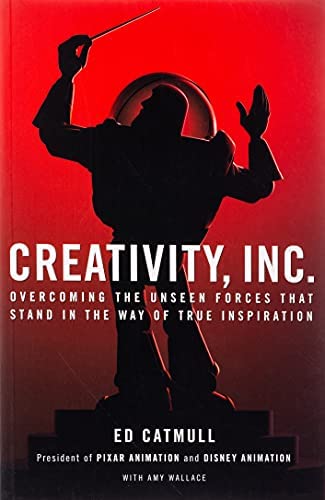
Creativity, Inc.
Ed Catmull
“The podcast references Ed Catmull's book, which discusses George Lucas and his entrepreneurial ideas.”
Sentiment: Highly Recommended
Trigger: Ed Catmull and Pixar
For: Entrepreneurs and aspiring filmmakers
Key quote: “Last week, I did a podcast, I created a podcast on Ed Catmull, which was one of the founders of Pixar, and based on his book, Creativity, Inc., which was absolutely a fantastic book.”
The host mentions 'Creativity, Inc.' as a fantastic book that provides insights into Ed Catmull's experiences at Pixar, particularly his work with George Lucas. The ideas presented in the book about entrepreneurship and innovation are highlighted as particularly interesting and valuable.
ASIN: B09W2VSMCL
Buy on AmazonClick the book cover image to open the affiliate link.
The Godfather
Mario Puzo
“Coppola was wooed to take the helm of a low budget action film based on one of the biggest books of 1969, a sprawling gangster novel by Mario Puzo called The Godfather.”
Sentiment: Deep Dive
Trigger: Coppola's filmmaking journey
For: Film enthusiasts and aspiring filmmakers
Key quote: “So on September 28th, Coppola signed the deal with Paramount to direct The Godfather, with production to begin in the spring of 1971.”
The host discusses how Coppola's financial struggles and creative decisions led him to direct 'The Godfather.' This film became a pivotal moment in both Coppola's career and the landscape of American cinema.
ASIN: N/A
Buy on AmazonClick the book cover image to open the affiliate link.